
Brevis token launch imminent: Community incentives account for 32.2%, airdrop registration coming soon

Original | Odaily
Author | Asher
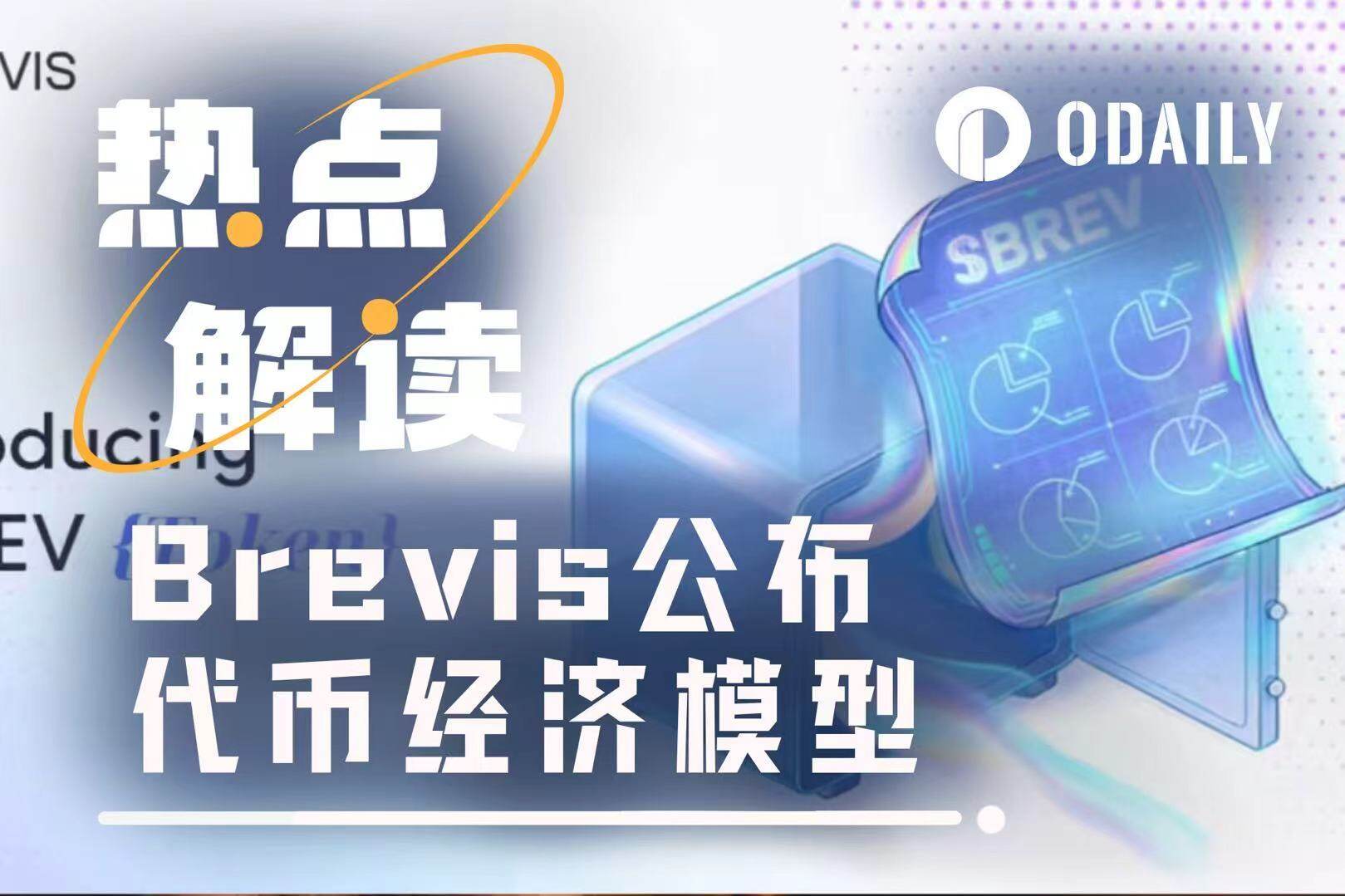 Yesterday, Brevis, favored by Vitalik, published an article announcing its tokenomics. The total supply of the BREV token is 1 billion, with the specific allocation as follows:
- Ecosystem Development: Accounts for 37% of the total token supply, i.e., 370 million tokens, used for ecosystem development, R&D, strategic partners, initial market building, and long-term protocol expansion;
- Community Incentives: Accounts for 32.2% of the total token supply, i.e., 322 million tokens, used for rewards to validators, stakers, and community contributors, including different categories of initial airdrops to eligible contributors and community members;
- Team: Accounts for 20% of the total token supply, i.e., 200 million tokens, allocated to current and future core developers and contributors of Brevis;
- Investors: Accounts for 10.8% of the total token supply, i.e., 108 million tokens, allocated to Brevis seed round investors.
Among them, the ecosystem development and community incentive plans will be linearly unlocked within 24 months after TGE, with 14.50% and 10.50% of the tokens circulating at TGE, respectively. The allocations for the team and investors will be fully locked for the first year after TGE with no initial unlock, and then distributed linearly over 24 months.
In addition, the Brevis team stated that the airdrop registration portal will be launched soon. Combined with the announcement from Coinbase Markets on December 20 that Brevis (BREV) has been added to the listing roadmap, it is clear that Brevis is about to conduct its TGE.
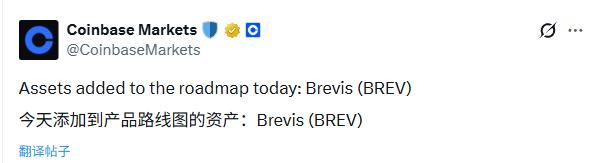
Coinbase has added Brevis (BREV) to its listing roadmap
Brevis: The “Smart Engine” Featuring the Concept of an “Infinite Computation Layer”

Brevis is an off-chain computation engine built on zero-knowledge proofs, positioning itself as the “infinite computation layer for Web3 and everything.” Simply put, Brevis enables smart contracts to become “smarter,” shifting from passive execution to proactive computation, which saves computational costs, improves efficiency, and facilitates user-protocol interaction, asset accumulation, and protocol adoption. Brevis has attracted significant community discussion due to Vitalik’s endorsement.
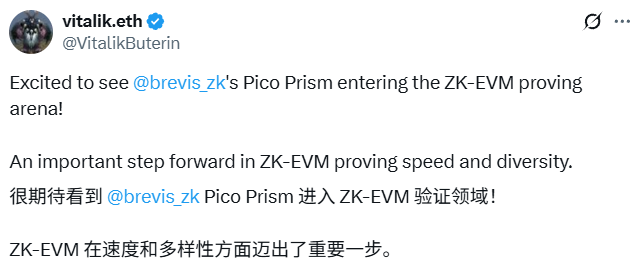
Brevis receives endorsement from Vitalik
In November last year, Brevis completed a $7.5 million seed round led by Polychain and Yzi Labs.
The First Phase Tasks Are Still Ongoing
Currently, all 11 tasks in Brevis’ second phase have ended, but the first phase tasks are still ongoing, and the snapshot time has not yet been announced. It is worth taking the last opportunity to earn points for “zero-cost farming.”
STEP 1. Enter the interaction website and connect your wallet.
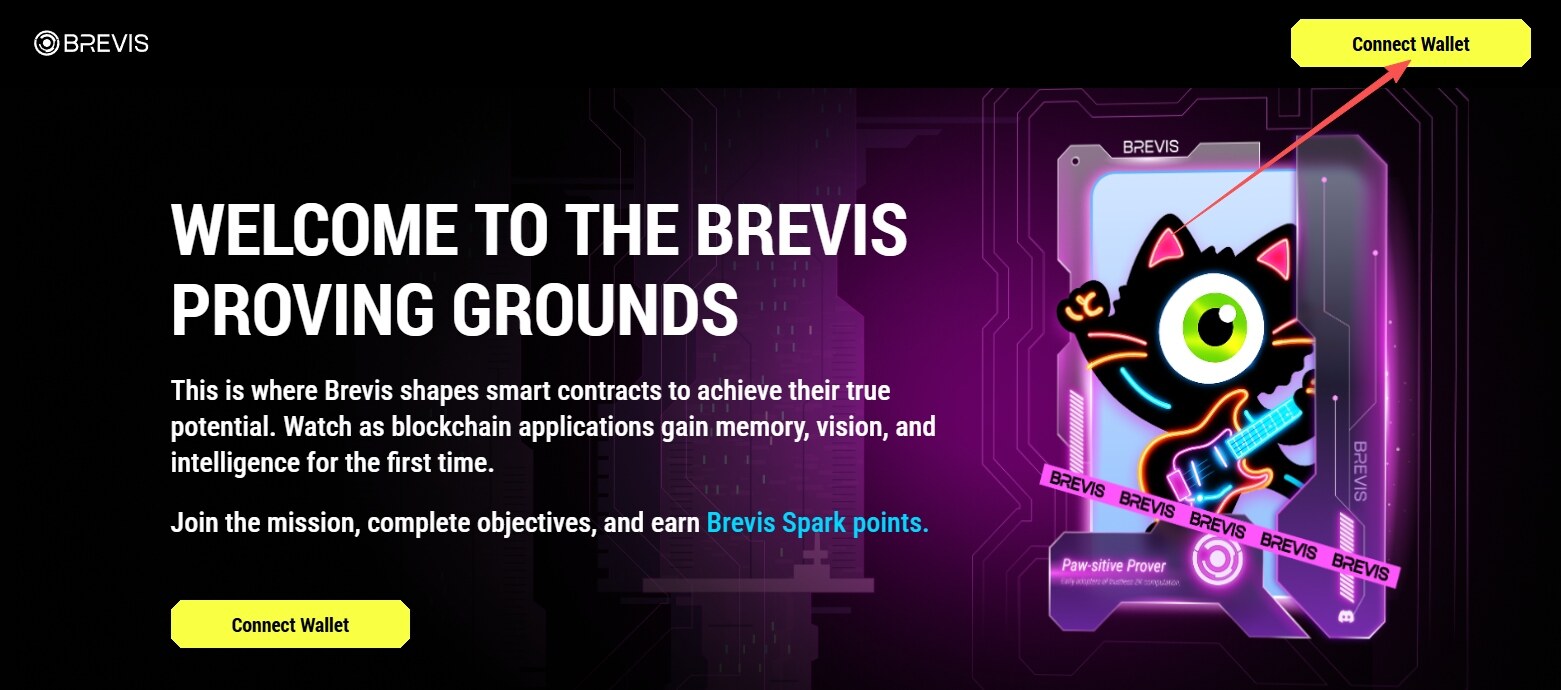
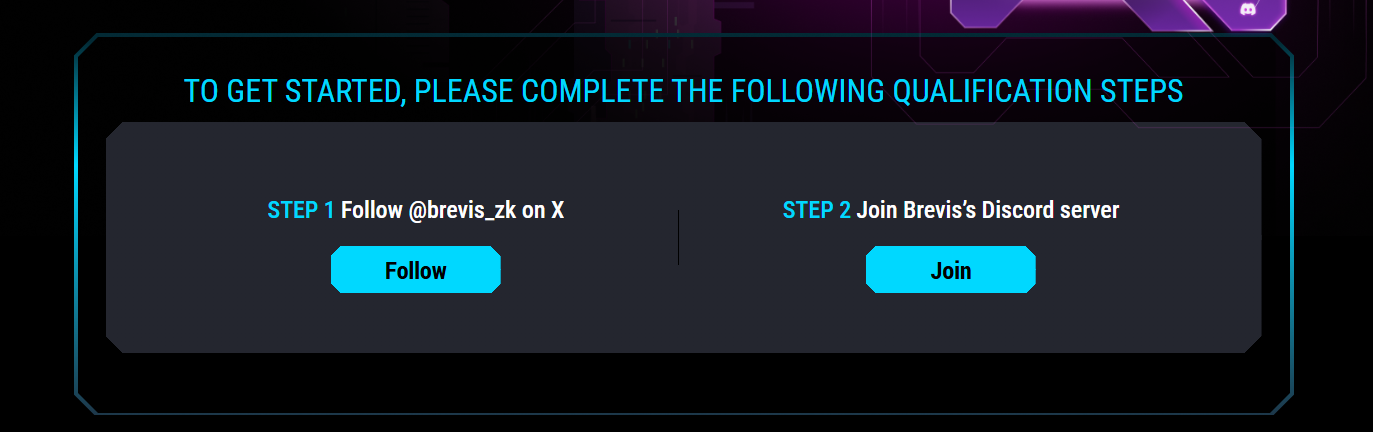
STEP 2. After binding your personal account, follow the official X account and join the official Discord. Entering an invitation code will earn you 50 points (you can use the invitation code: IABsdu).
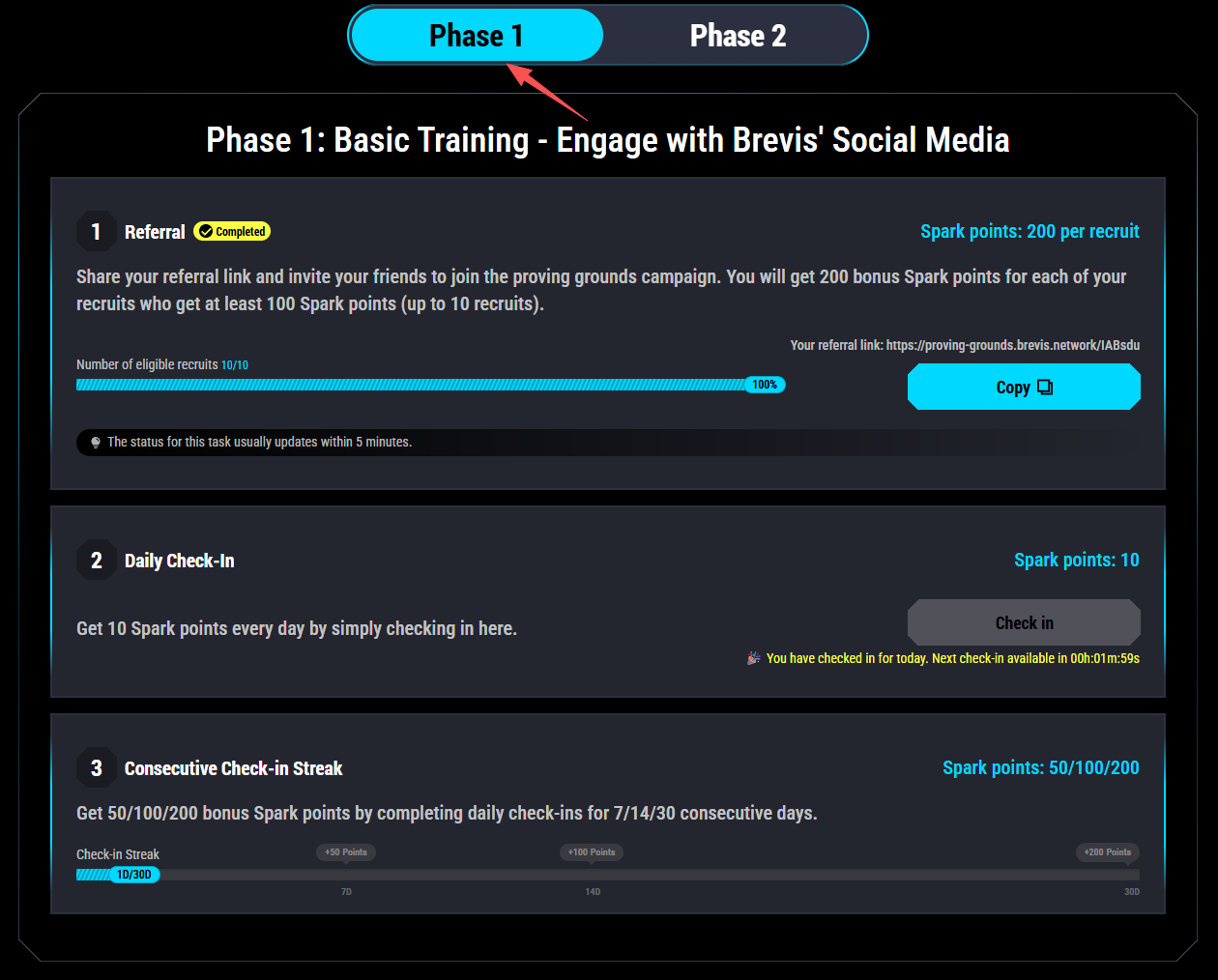
STEP 3. Click “Phase 1”; tasks that can still earn points include invitation tasks and daily check-in tasks.
Disclaimer: The content of this article solely reflects the author's opinion and does not represent the platform in any capacity. This article is not intended to serve as a reference for making investment decisions.
You may also like
Here’s why BlackRock believes autonomous AI systems will drive next stablecoin boom
BlackRock expects exchange-traded compute futures as it pitches stablecoins for AI agents
Report: TSMC to Raise Wafer Foundry Prices by 3% to 6% Starting January Next Year, Order Visibility Extended to 2030
According to media reports, TSMC's advanced and high-priced processes such as 2nm and 3nm have seen the largest price increases; mature and specialty processes are subject to individual negotiation based on products, capacity utilization, and customer conditions. Currently, TSMC's 8-inch fabs have a capacity utilization rate exceeding 100%, and processes below 45nm are at full capacity. The construction of AI data centers is not only driving demand for GPU and HBM, but also boosting orders for mature processes such as PMIC, MCU, and analog ICs.
U.S. Treasury plans to repurchase up to $6 billion in long-term bonds, 30-year yield hits highest since 2007
This is the second round of enhanced long-term bond buybacks by the Treasury, this time focusing on 20- to 30-year government bonds. After the announcement of the planned upper limit, the yield on 30-year U.S. Treasury bonds continued to rise, at one point exceeding 5.4%. In the first round of enhanced buybacks two weeks ago, the upper buyback target was also $6 billion, which was lower than some market participants had expected, and the actual buyback amounted to only $5.2 billion due to insufficient competitive bidding, according to the Treasury.
Crypto prices
More


