Bitget App
Trade smarter
Buy cryptoMarketsTradeFuturesEarnAISquareMore
Ethereum – Why $69B remains locked in DeFi despite weak ETH prices

Ethereum – Why $69B remains locked in DeFi despite weak ETH prices

AMBCryptoAMBCrypto2025/12/24 18:03
By:AMBCrypto

Ethereum’s [ETH] price looks shaky, but its foundation remains strong.

Behind the short-term pressure, the network is dominating DeFi. ETH is leaving exchanges, so the available supply is decreasing.

What makes this moment stand out, however, is who is stepping in. Institutional players are increasing exposure, even during times of caution.

Price and investor behavior are moving apart. However, that gap may close soon.

Ethereum is hard to ignore

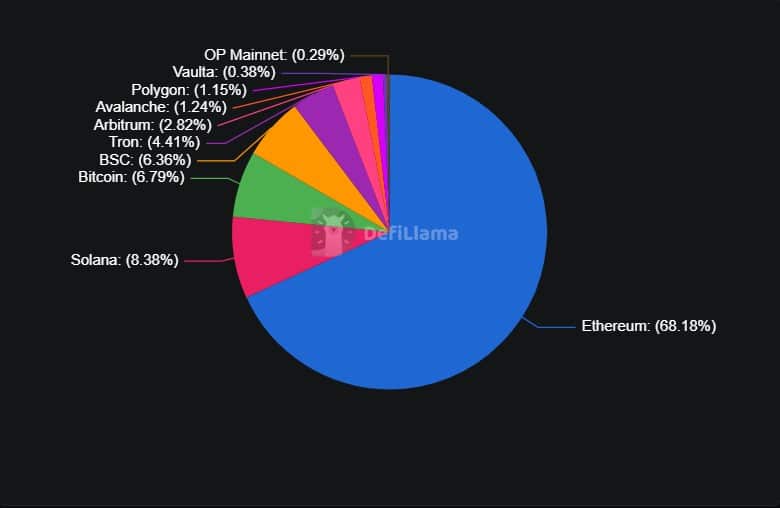
The network now holds nearly 68.2% of global DeFi TVL, with over $69 billion deployed on its smart contracts.

That is more capital than Solana [SOL], Tron [TRX], BNB Smart Chain [BNB], Bitcoin [BTC], Avalanche [AVAX], and every other chain combined.
Ethereum – Why $69B remains locked in DeFi despite weak ETH prices image 0

Source: DeFiLlama

The network’s edge goes beyond DeFi alone. It also hosts more than $191 billion in stablecoins and controls half of the tokenized euro market.

For institutions, this matters because stablecoins are issued where security and reliability are strongest, and Ethereum remains the preferred settlement layer.

Big hands are in!
Ethereum – Why $69B remains locked in DeFi despite weak ETH prices image 1

Source: X

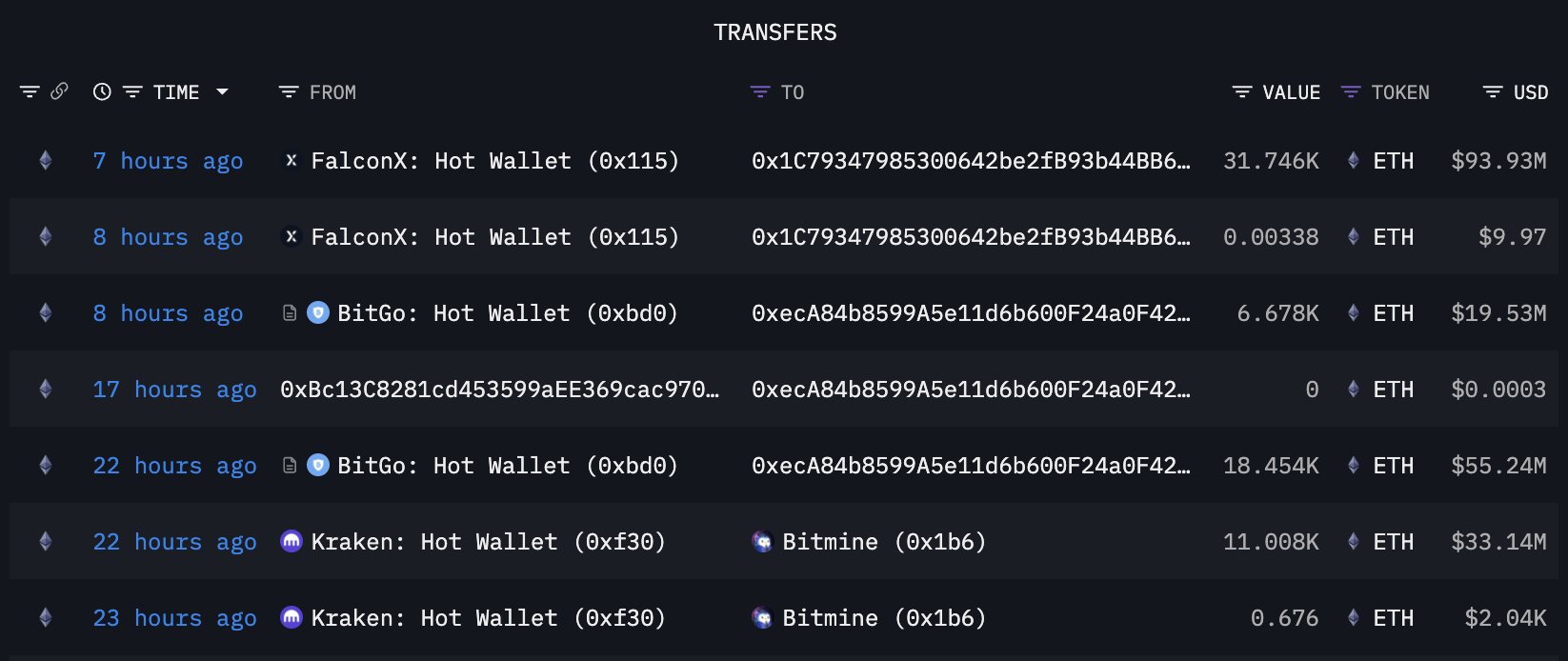
That dominance is translating into real buying, with institutions moving fast to increase exposure. In the past 24 hours alone, Tom Lee’s Bitmine purchased nearly 68,000 ETH, worth over $200 million.
Ethereum – Why $69B remains locked in DeFi despite weak ETH prices image 2

Source: X

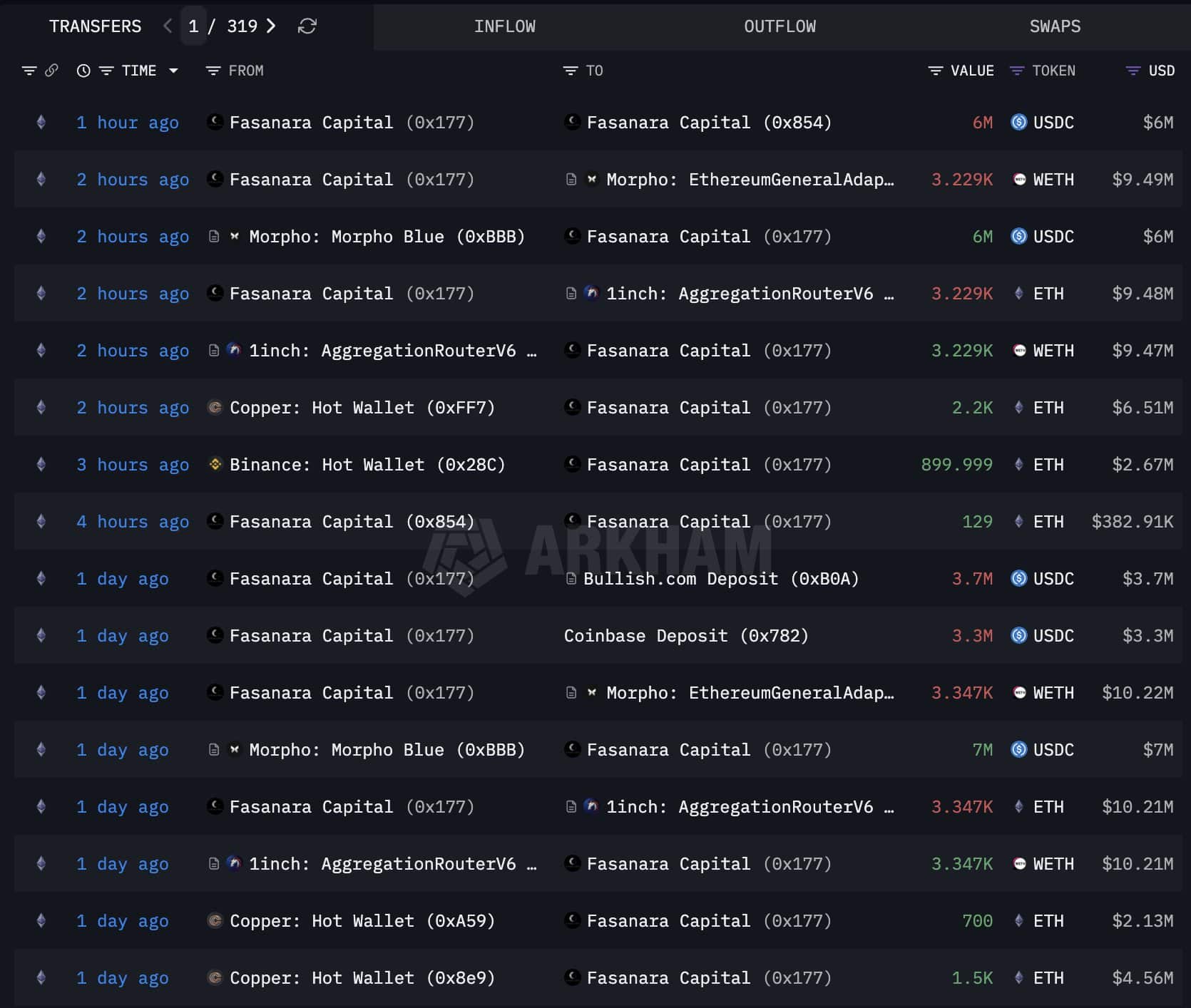
Fasanara Capital followed a similar path, buying ETH, depositing it into DeFi protocols, and borrowing against it to buy even more. This is active positioning.

A supply shock is taking shape
Ethereum – Why $69B remains locked in DeFi despite weak ETH prices image 3

Source: CryptoQuant

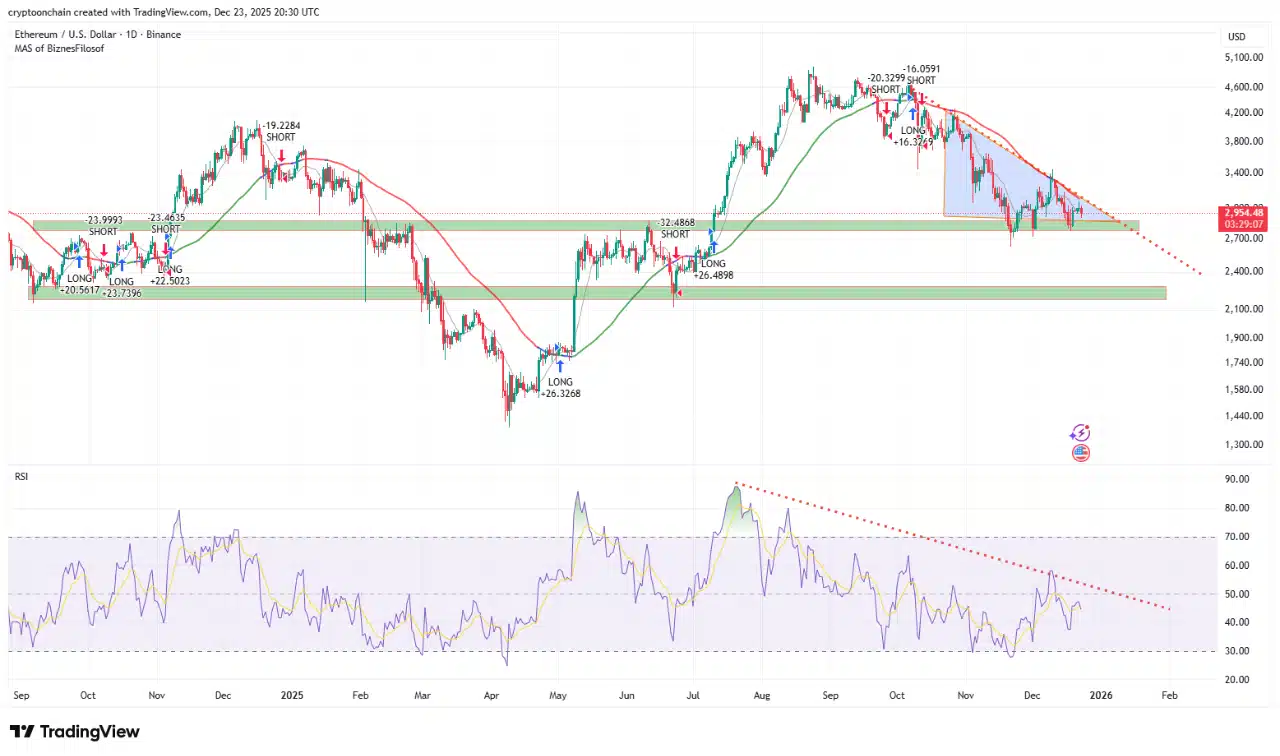
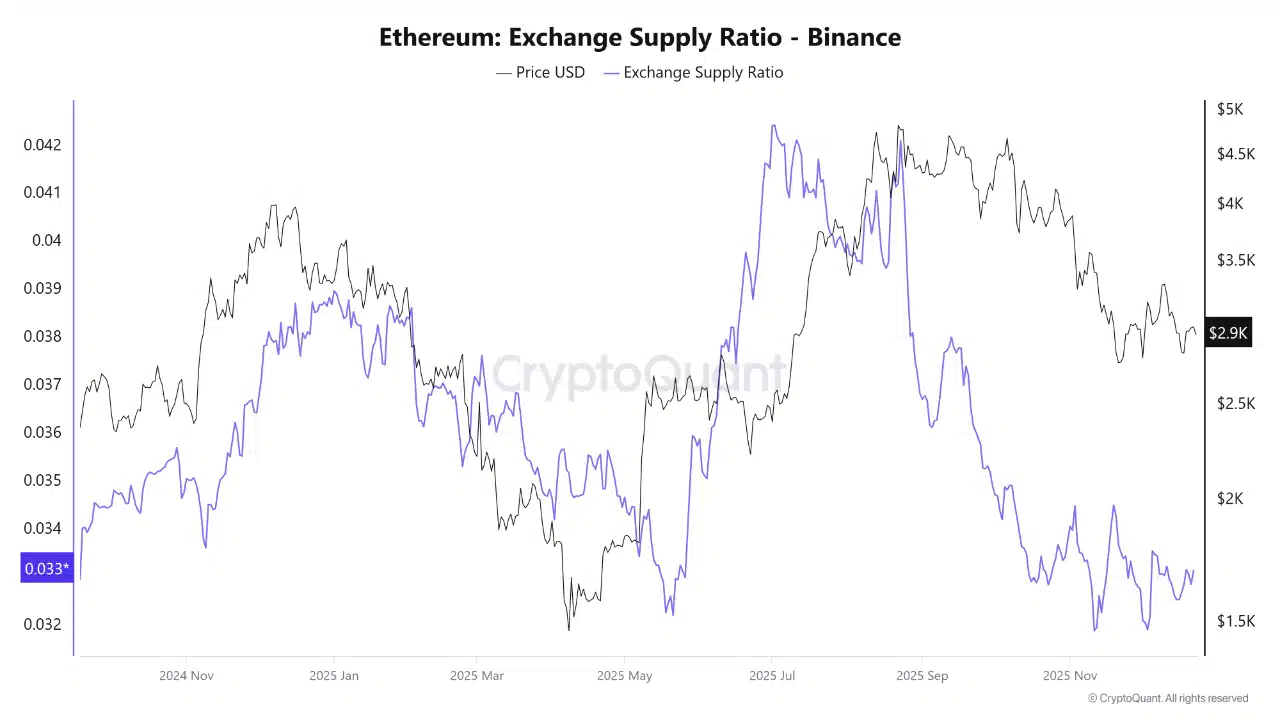
All this buying is happening at a delicate moment for ETH’s price. Ethereum is trading under technical pressure, stuck below key resistance levels with support near $2,800. On its own, it looks fragile, too.
Ethereum – Why $69B remains locked in DeFi despite weak ETH prices image 4

Source: CryptoQuant

But, Ethereum’s exchange supply ratio on Binance has fallen to 0.032, the lowest since September 2024. Simply put, less ETH is sitting on exchanges ready to be sold.

With this clash, if buyers continue to defend support, a tight supply could quickly flip the narrative.

Final Thoughts

  • Ethereum controls 68%+ of DeFi TVL. Institutions buy even while price struggles.
  • Falling exchange supply and $200M+ ETH buys could cause a supply-driven rebound
0
1

Disclaimer: The content of this article solely reflects the author's opinion and does not represent the platform in any capacity. This article is not intended to serve as a reference for making investment decisions.

Understand the market, then trade.
Bitget offers one-stop trading for cryptocurrencies, stocks, and gold.
Trade now!

You may also like

Report: TSMC to Raise Wafer Foundry Prices by 3% to 6% Starting January Next Year, Order Visibility Extended to 2030

According to media reports, TSMC's advanced and high-priced processes such as 2nm and 3nm have seen the largest price increases; mature and specialty processes are subject to individual negotiation based on products, capacity utilization, and customer conditions. Currently, TSMC's 8-inch fabs have a capacity utilization rate exceeding 100%, and processes below 45nm are at full capacity. The construction of AI data centers is not only driving demand for GPU and HBM, but also boosting orders for mature processes such as PMIC, MCU, and analog ICs.

华尔街见闻2026/09/23 20:36

U.S. Treasury plans to repurchase up to $6 billion in long-term bonds, 30-year yield hits highest since 2007

This is the second round of enhanced long-term bond buybacks by the Treasury, this time focusing on 20- to 30-year government bonds. After the announcement of the planned upper limit, the yield on 30-year U.S. Treasury bonds continued to rise, at one point exceeding 5.4%. In the first round of enhanced buybacks two weeks ago, the upper buyback target was also $6 billion, which was lower than some market participants had expected, and the actual buyback amounted to only $5.2 billion due to insufficient competitive bidding, according to the Treasury.

华尔街见闻2026/09/23 20:36