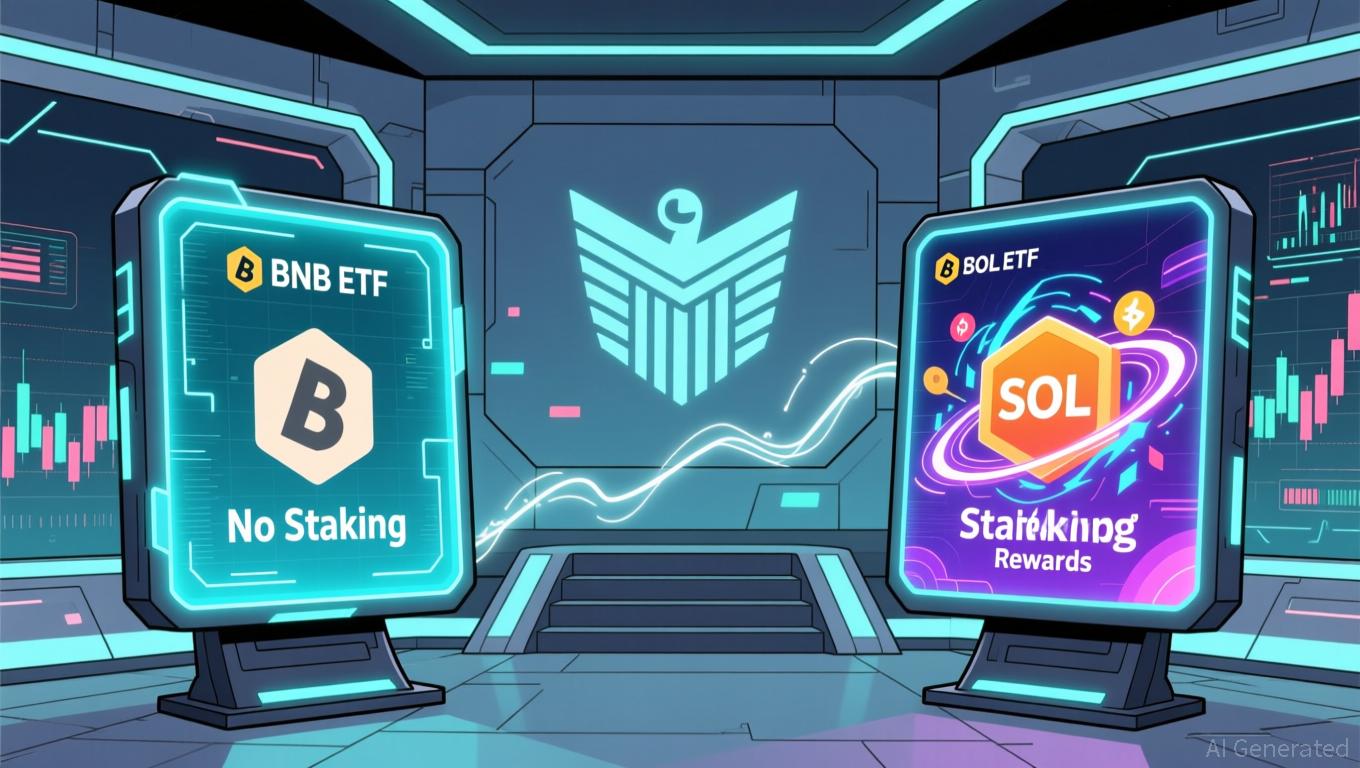
VanEck has decided to remove staking from its proposed spot
BNB
exchange-traded fund (ETF), a notable shift from the approach taken with its recently introduced
Solana
(SOL) ETF. The asset management firm revised its S-1 registration with the U.S. Securities and Exchange Commission (SEC) on Nov. 21,
making it clear that the BNB ETF will not participate in staking
at launch and does not guarantee any future involvement in staking. This adjustment highlights increasing regulatory scrutiny of BNB,
which the SEC has previously identified as a security
, making staking arrangements riskier due to potential classification as unregistered securities offerings.
The revised document, which
brings the BNB ETF in line with the SEC’s strict standards
, stands in contrast to
VanEck’s Solana ETF
, which does allow investors to earn staking rewards. The BNB ETF’s S-1/A amendment, listed under the ticker VBNB, is intended for Nasdaq and
incorporates direct input from regulators
.
By excluding staking, VanEck
recognizes a possible compromise
: the ETF may underperform compared to holding BNB directly, since investors will miss out on staking rewards that could boost returns. Still, the company points out that this strategy
improves the chances of regulatory acceptance
, which is crucial in the unpredictable crypto sector.
The SEC’s close examination of BNB has largely shaped VanEck’s approach. The agency’s earlier classification of BNB as a security
has introduced legal complexities
for staking services, which often depend on external providers to generate returns. VanEck’s filing states that any future staking would require a separate prospectus and regulatory approval,
emphasizing the firm’s careful approach
amid ongoing legal disputes between the SEC and Binance, the issuer of BNB. This regulatory uncertainty has led asset managers to focus on compliance rather than innovation, even as other digital assets like Solana gain popularity through staking-enabled ETFs
.
This decision also mirrors wider trends in the market. While
Bitcoin
and
Ethereum
ETFs saw $5.34 billion in net outflows during November,
Solana ETFs brought in $369 million
in new investments, largely due to their yield-generating capabilities. VanEck’s Solana ETF, which
waives fees for the first $1 billion
in assets, has benefited from this trend by offering both price exposure and staking incentives. In contrast, the BNB ETF’s lack of staking makes it a more cautious option, likely to attract those who value regulatory certainty over additional yield
.
As the crypto ETF sector continues to develop, VanEck’s BNB filing could set an example for other asset managers facing regulatory challenges. The SEC’s recent green light for
ETFs has sped up the adoption of alternative coins, but BNB’s particular legal situation
to mainstream investment products more complex. For now, VanEck seems to be putting regulatory compliance first, even if it means giving up features that could potentially increase investor returns.