
GESPA Files Complaint Against FIFA’s NFT Platform, Alleging Unlicensed Gambling Activities

Switzerland’s gambling watchdog has filed a formal complaint against FIFA’s NFT platform, accusing it of operating as an unlicensed gambling service. The move signals growing regulatory pressure on digital collectibles and Web3 ventures as authorities grapple with how blockchain-based reward systems fit within traditional gambling laws.
In brief
- GESPA claims FIFA Collect’s competitions involve chance-based rewards, classifying them as gambling under Swiss law.
- The regulator argues users pay to enter events with random draws, resembling lotteries and sports betting systems.
- FIFA Collect’s “Right to Buy” NFTs, sold for $999, allegedly include elements of chance and monetary gain.
- The investigation follows FIFA’s migration of its NFT platform to Avalanche, adding new lottery-like mechanics.
GESPA Claims FIFA Collect NFTs Cross the Line Into Gambling Territory
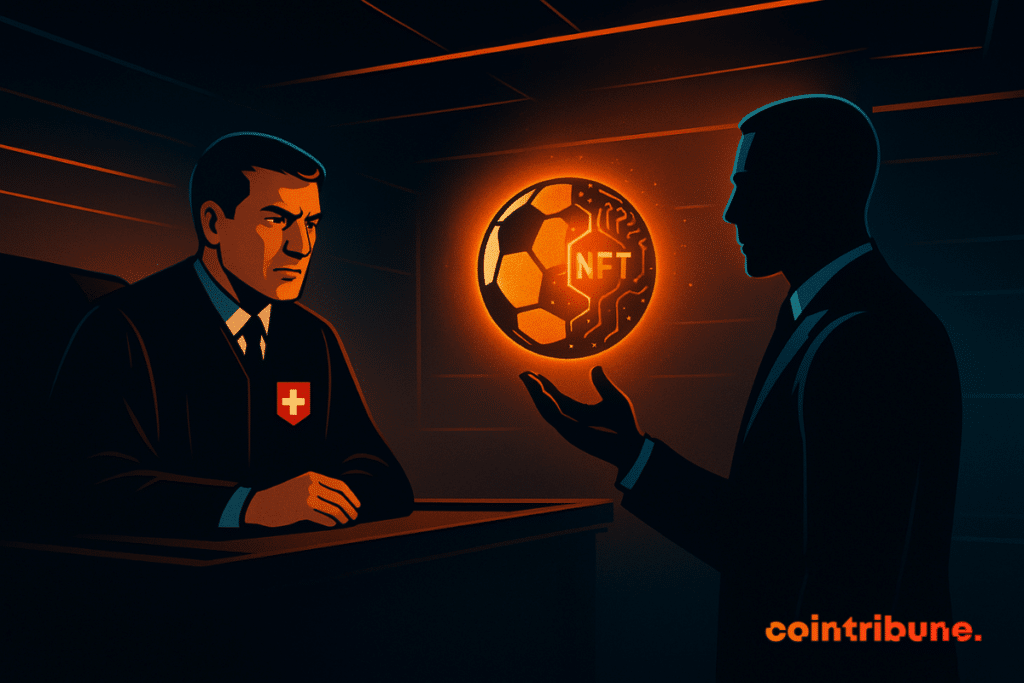
Switzerland’s federal gambling regulator, GESPA, has filed a complaint against FIFA’s non-fungible token (NFT) platform, FIFA Collect, alleging that it operates as an unlicensed gambling service.
GESPA stated that certain competitions and reward programs on the platform involve elements of chance, which, under Swiss law, classify them as gambling. According to the regulator, users can participate in these events only by paying a monetary stake, with prizes determined by random draws or similar methods .
Participation in the competitions is only possible in exchange for a monetary stake, with monetary benefits to be won. Whether participants win a prize depends on random draws or similar procedures.
GESPA
The regulator said these activities resemble lotteries and sports betting—categories that, in Switzerland, are restricted to licensed operators Sporttip and Jouez Sport .
Collect’s Migration to Avalanche Spurs Regulatory Heat
GESPA began investigating FIFA Collect in October over its “Right to Buy” NFTs, which grant holders the ability to purchase World Cup tickets at face value. These NFTs—tied to major teams such as Argentina, Spain, France, England, and Brazil—sold for $999 each and have all sold out, according to FIFA Collect data.
The platform, originally launched in 2022 on the Algorand blockchain, has since announced plans to migrate to its own blockchain built as a subnet on Avalanche. This shift reportedly boosted activity on the platform and introduced new distribution methods resembling lottery mechanics, drawing regulatory scrutiny.
GESPA’s complaint marks the latest clash between digital collectibles and traditional gambling laws. The regulator noted that it has referred the matter to law enforcement, which will determine whether FIFA’s NFT operations violate Swiss regulations.
While GESPA has not taken an official stance beyond filing the complaint, it has offered to assist in any future investigation. Observers suggest that FIFA may seek to modify its NFT distribution model or reach an agreement with regulators to avoid further legal action.
Disclaimer: The content of this article solely reflects the author's opinion and does not represent the platform in any capacity. This article is not intended to serve as a reference for making investment decisions.
You may also like
XRP Pundit: First Thing You Should Do When You Become a Crypto Millionaire
 VIPTradFi Focus: Where Does the RWA Market Stand Today?
1. Crypto outperformed traditional equity indexes following the rate hike, but elevated interest rates remain a key constraint on cross-asset allocation. From September 12 to 18, BTC, ETH, and SOL gained 4.83%, 3.84%, and 9.96%, respectively, while the S&P 500 edged down 0.08%. The U.S. Dollar Index rose 1.11%, and the 10-year U.S. Treasury yield closed at approximately 4.998%. Improving risk appetite is therefore coexisting with elevated discount rates, raising the bar for RWA allocation: investors need to compare not only returns on the underlying assets, but also on-chain liquidity and collateral efficiency. 2. Growth in tokenized equities is occurring even as the overall RWA market remains under pressure. As of September 18, Distributed Asset Value across RWAs stood at $38.503 billion, down 1.13% week over week, while tokenized equities reached $3.056 billion, up 6.03%. This week's data are better explained by capital reallocating across different RWA segments than by a broad-based expansion of the entire RWA market. 3. For exchanges, the opportunity lies in connecting spot holdings, collateral, and derivatives. Reality's distributed asset value stands at approximately $155 million, while eligible rTokens can already be used within Bitget's UTA margin framework. Across CoinGlass's verifiable sample of 177 TradFi instruments, open interest reached approximately $11.498 billion, up 2.06% week over week, even as weekly trading volume declined 7.60%. The medium-term opportunity remains intact, but deeper utilization will depend on liquidity, collateral use, and sustained trading activity. 4.Assets to watch: BTC, ETH, SOL, NEAR, ZEC, gold, tokenized U.S. equities, COST. 5.Key metrics to watch: rToken collateral utilization, the durability of TradFi open interest and trading volume, and next week's employment and consumer data.

Gold prices fall Rs 1,331/10 gram, silver dips Rs 1,600/kg as Mideast tensions outweigh oil fall: Key levels to track
Strategists Say Market's ‘Wall of Worry' Is Healthy, Not a Warning Sign

Crypto prices
More


