
Solana’s Weekly Gains Hint at a Potential Breakout Above This Price

Solana (SOL) has climbed 10% in the past week, buoyed by bullish technical signals. Trading within an ascending parallel channel and supported by a positive Elder-Ray Index, SOL sits just below a key resistance level at $186.52, with the potential to push past $190 if buying momentum persists.
Solana’s price has gained significant momentum over the past week. It has risen by 10% amid the improving sentiment across the broader cryptocurrency market.
This renewed optimism has propelled the coin upward, and with bullish momentum gaining strength, SOL appears poised for a sustained rally.
Market Momentum Turns in Solana’s Favor
SOL’s double-digit rally in the past week has caused its price to trade within an ascending parallel channel on the daily chart.
Want more token insights like this? Sign up for Editor Harsh Notariya’s Daily Crypto Newsletter .
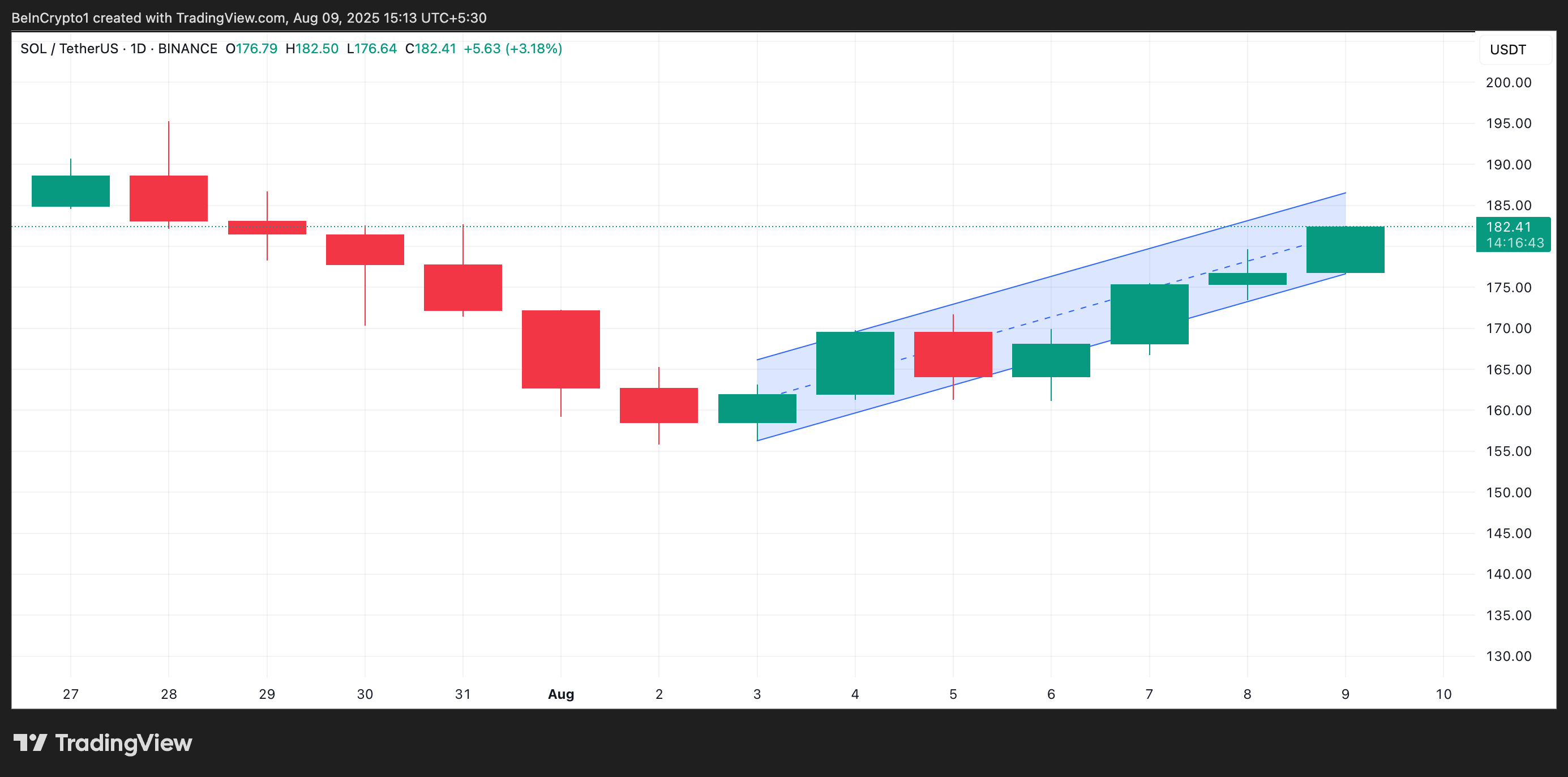 Solana Ascending Parallel Channel. Source:
TradingView
Solana Ascending Parallel Channel. Source:
TradingView
This pattern is formed when price action creates a series of higher highs and higher lows, moving between two upward-sloping parallel trendlines. The lower boundary acts as dynamic support, while the upper boundary serves as resistance
When an asset trades within such a channel, it signals an uptrend where demand outweighs supply. Readings from SOL’s Relative Strength Index (RSI) confirm the buy-side pressure currently backing its rally. As of this writing, this momentum indicator stands at 57.63.
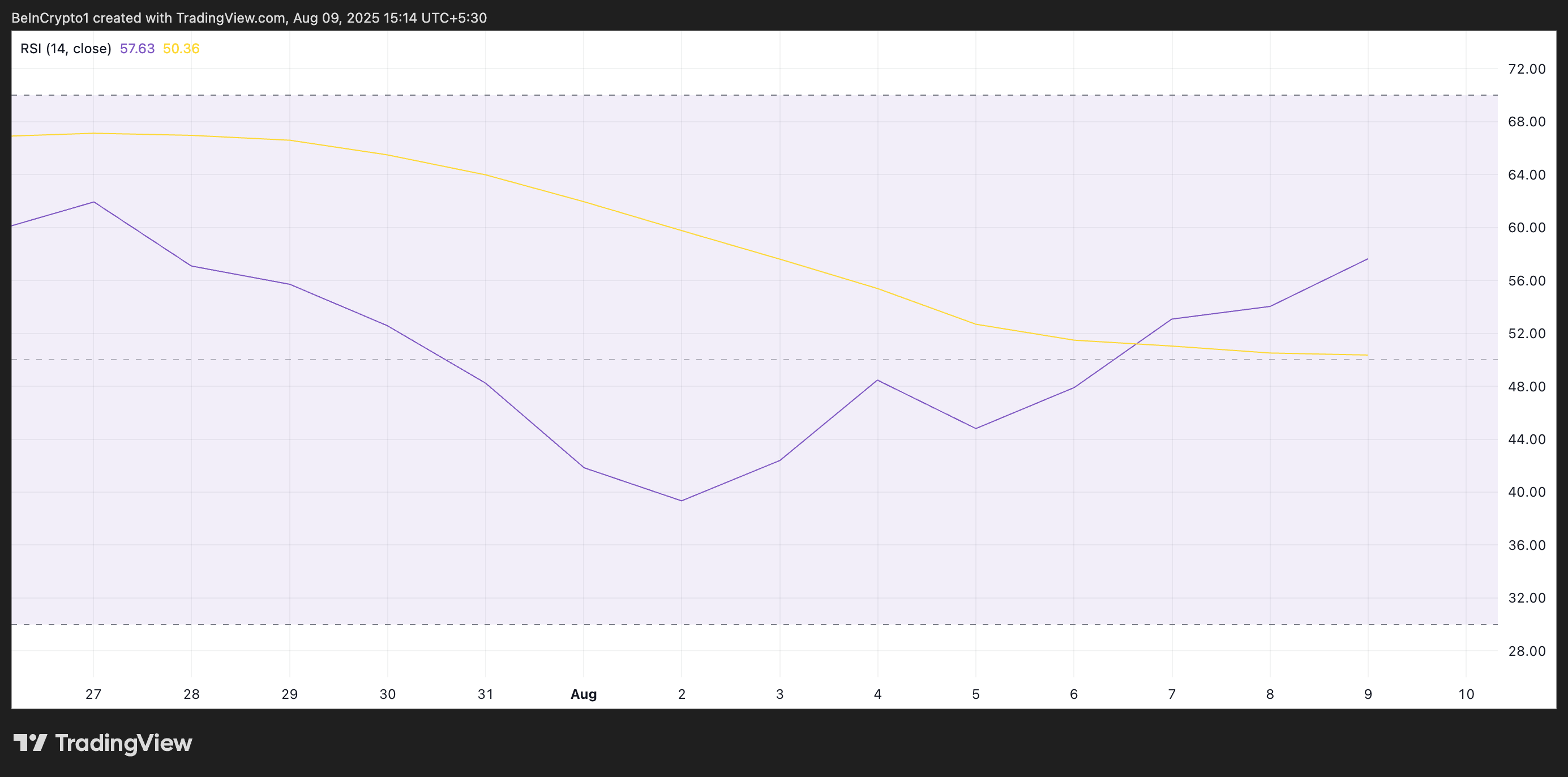 Solana RSI. Source:
TradingView
Solana RSI. Source:
TradingView
The RSI indicator measures an asset’s overbought and oversold market conditions. It ranges between 0 and 100. Values above 70 suggest that the asset is overbought and due for a price decline, while values under 30 indicate that the asset is oversold and may witness a rebound.
SOL’s RSI readings indicate market participants prefer accumulation over distribution. If this trend continues, its price could continue to rise.
Furthermore, SOL’s Elder-Ray Index has remained positive for the past two trading sessions, marking a significant turnaround after a nine-day streak of red histogram bars. This shift signals a positive change in market momentum, with the index currently at 11.71 at press time.
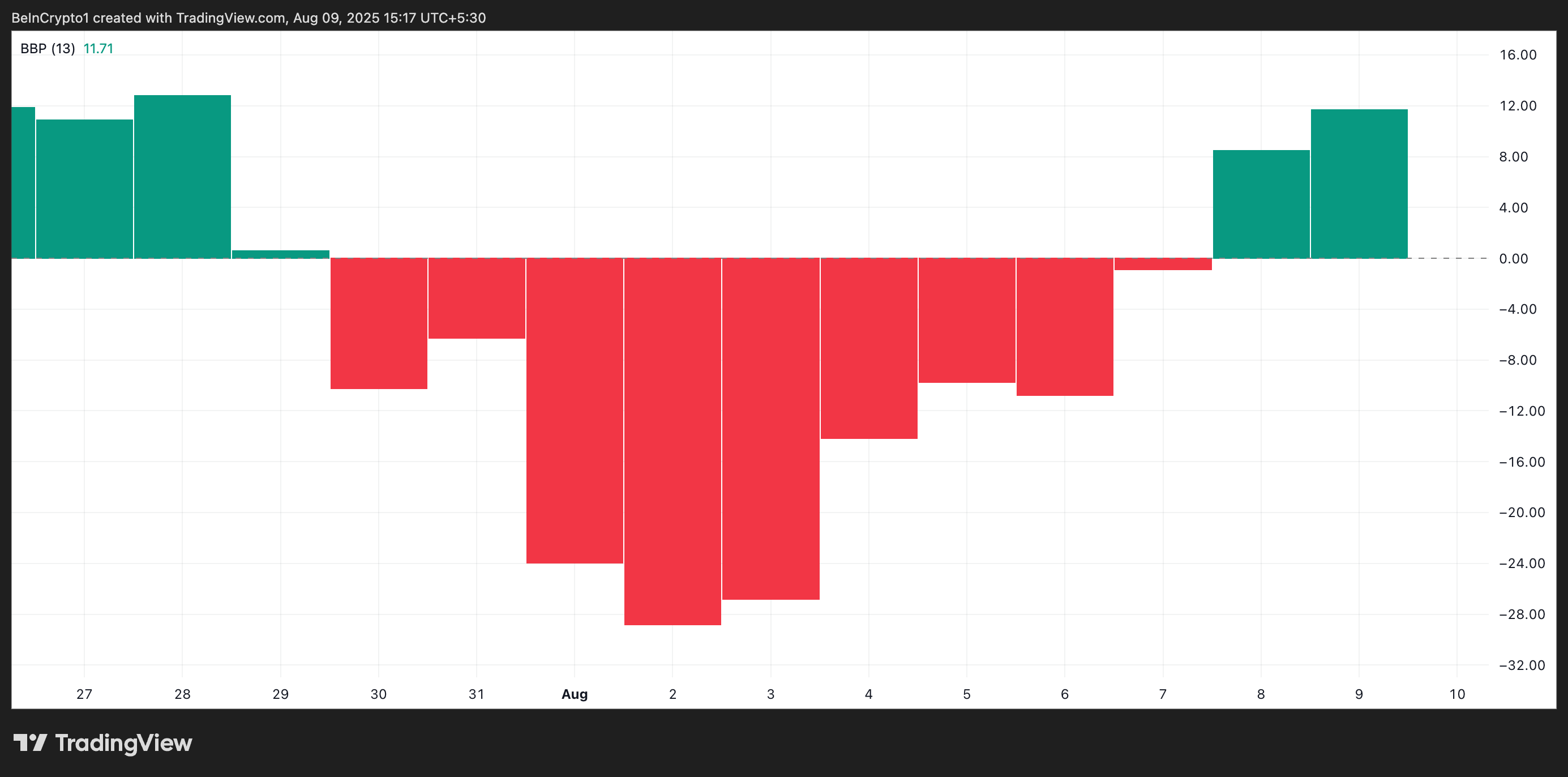 Solana Elder-Ray Index. Source:
TradingView
Solana Elder-Ray Index. Source:
TradingView
The Elder-Ray Index measures the balance of power between buyers and sellers. When its value is positive, bullish pressure outweighs bearish pressure, with buyers gaining market control.
In SOL’s case, its Elder-Ray Index strengthens the bullish outlook and suggests that the recent rally could extend if buying interest persists.
SOL Bulls and Bears Face Off Near $186
At press time, SOL changes hands at $181.82, sitting just below the resistance level at $186.52, the upper boundary of its ascending parallel channel.
A surge in buying pressure could see the token break through this barrier and push past the psychologically significant $190 mark.
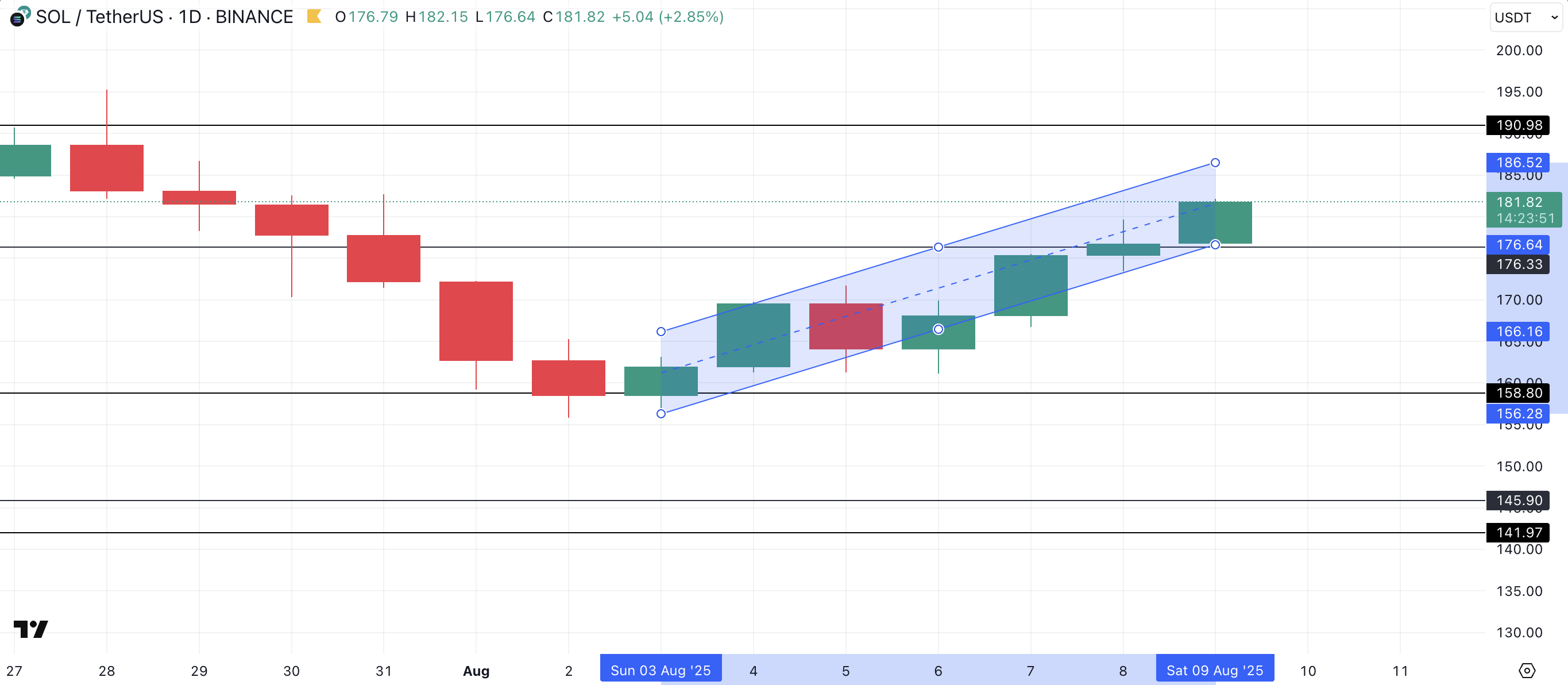 Solana Price Analysis. Source:
TradingView
Solana Price Analysis. Source:
TradingView
However, if selling pressure returns, SOL risks losing recent gains and dropping to $176.64.
Disclaimer: The content of this article solely reflects the author's opinion and does not represent the platform in any capacity. This article is not intended to serve as a reference for making investment decisions.
You may also like
Clarity Act Vote Takes Place in a Few Hours, Here’s Everything You Need to Know

Pi Network extends recovery above $0.097 as ecosystem utility grows
Bitcoin risks drop to $71k as rounded-top pattern takes shape
It is almost consensus that the Federal Reserve will raise interest rates on Thursday, why does Standard Chartered refuse to "surrender"?
Standard Chartered believes that core inflation pressures may be overestimated and that raising interest rates remains a “wrong policy choice.” Tariffs have pushed up the PCE by about 0.7 percentage points, but this impact is expected to fade; the super-core CPI has already returned to a normal range, and consumer-side pressures are limited. In July, only three FOMC members supported a rate hike, and current data is insufficient to prompt more members to shift their stance. A more reasonable approach would be to wait until the effects of tariffs and data revisions dissipate before assessing the inflation trend.
Crypto prices
More


