
Ethereum’s Q4 Fusaka upgrade at risk as developers fixate on 2026 Glamsterdam plans

Ethereum Foundation (EF) Co-Executive Director Tomasz Stańczak has urged developers to redirect their attention toward the upcoming Fusaka upgrade, warning that focus on the later Glamsterdam release could jeopardize near-term progress.
In an Aug. 8 update on X, Stańczak said he had advised project coordinators to pause discussions about Glamsterdam. That upgrade is not expected until early or mid-2026, while Fusaka is scheduled for integration in the fourth quarter of 2025.
He argued that shifting conversations back to Fusaka is essential, as the upgrade is already in the testnet phase and faces time-sensitive development challenges.
Stańczak suggested that reducing the number of calls dedicated to future forks could help the team concentrate on solving current issues.
Why Fusaka upgrade remains priority
The EF executive stressed that hitting Fusaka’s target date is vital for maintaining Ethereum’s broader roadmap. He cautioned that the network could fail to deliver on its stated vision without tighter coordination.
He stated:
“As I have said many times, no amount of talking about Ethereum’s roadmap and vision matters if we cannot achieve coordination levels that consistently meet goals on schedule.”
Meanwhile, Stańczak expressed optimism that the development teams would resolve the bottlenecks that have prompted some to propose shifting deadlines.
He said:
“Talented engineers are already working on the problems. We need broad agreement that timelines matter.”
Fusaka will introduce a range of technical enhancements through multiple Ethereum Improvement Proposals (EIPs). These include Peer Data Availability Sampling (PeerDAS) to improve data distribution, adjustments to the transaction gas limit, and refinements to blob parameters. Collectively, these changes are expected to strengthen scalability and performance.
The push to finalize Fusaka follows rising pressure from the Ethereum community for faster upgrade rollouts. Many see the changes as critical for keeping Ethereum competitive in a rapidly evolving blockchain landscape.
Glamsterdam remains on the roadmap and is projected to arrive before the third quarter of 2026. For now, however, Stańczak maintains that the network’s immediate priority must be ensuring Fusaka’s smooth and timely launch.
Disclaimer: The content of this article solely reflects the author's opinion and does not represent the platform in any capacity. This article is not intended to serve as a reference for making investment decisions.
You may also like
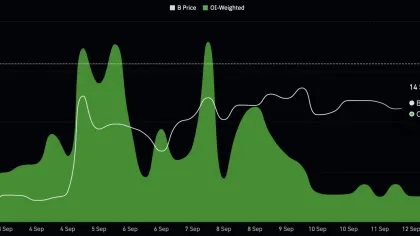
BUILDon rallies as holders hit record 87,320 – Can B extend its gains?
Goldman Sachs Hedge Fund Chief: "Zero-Day Options" Suppress U.S. Stock Volatility, Technology and Energy Remain the Best Choices
The S&P 500 has experienced intraday fluctuations of less than 1% for 27 consecutive trading days, marking the longest period of low volatility since the pandemic. Goldman Sachs warns that this "calm" is the result of zero-day options strategies forcibly locking in the market, and once a catalyst emerges, the compressed volatility energy will be released all at once. Meanwhile, expectations for a rate hike in September are rising, market sentiment has dropped to its lowest point of the year, and fiscal sustainability risks loom large—is this pot of heating water going to boil for much longer?
Balancer eyes wind-down after restructuring fails to revive revenue
Is a new wave of sell-offs approaching? The ultimate rival of the AI bull market emerges—The "global anchor of asset pricing" breaks through the 5% super threshold
After the 10-year US Treasury yield breaks back above the critical 5% mark, it is more likely to usher in a period of high-level tug-of-war and accelerated asset differentiation. Especially before energy shocks and the significantly eased large-scale expansion of the US fiscal deficit, the conditions to quickly replicate the sharp yield decline seen at the end of 2023 are not yet fully in place.

Crypto prices
More


