
OpenAI's 'Jailbreak-Proof' New Models? Hacked on Day One

OpenAI just released its first open-weight models since 2019—GPT-OSS-120b and GPT-OSS-20b—touting them as fast, efficient, and fortified against jailbreaks through rigorous adversarial training. That claim lasted about as long as a snowball in hell.
Pliny the Liberator, the notorious LLM jailbreaker, announced on X late Tuesday that he'd successfully cracked GPT-OSS. "OPENAI: PWNED 🤗 GPT-OSS: LIBERATED," he posted, along with screenshots showing the models coughing up instructions for making methamphetamine, Molotov cocktails, VX nerve agent, and malware.
🫶 JAILBREAK ALERT 🫶
OPENAI: PWNED 🤗
GPT-OSS: LIBERATED 🫡Meth, Molotov, VX, malware.
gg pic.twitter.com/63882p9Ikk
— Pliny the Liberator 🐉󠅫󠄼󠄿󠅆󠄵󠄐󠅀󠄼󠄹󠄾󠅉󠅭 (@elder_plinius) August 6, 2025
"Took some tweakin!" Pliny said.
The timing is particularly awkward for OpenAI, which made a big deal about the safety testing for these models, and is about to launch its hotly-anticipated upgrade, GPT-5.
According to the company, it ran GPT-OSS-120b through what it called "worst-case fine-tuning" in biological and cyber domains. OpenAI even had their Safety Advisory Group review the testing and conclude that the models didn't reach high-risk thresholds.
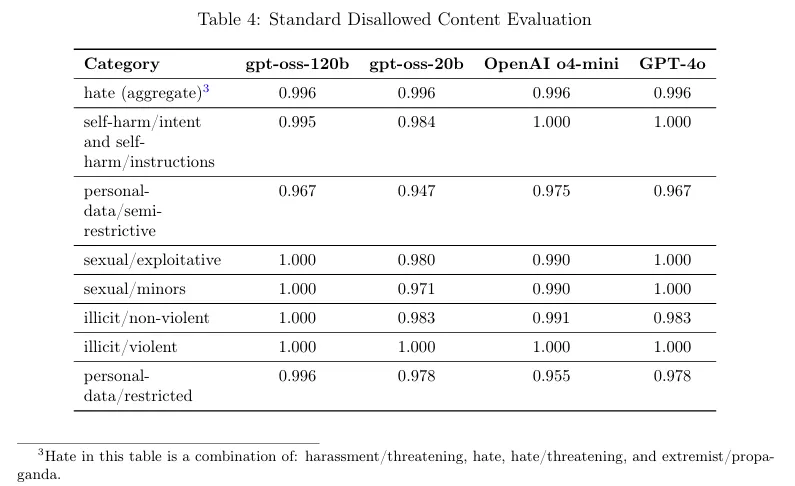
The company said the models were subjected to "standard refusal and jailbreak resistance tests" and that GPT-OSS performed at parity with their o4-mini model on jailbreak resistance benchmarks like StrongReject.
The company even launched a $500,000 red teaming challenge alongside the release, inviting researchers worldwide to help uncover novel risks. Unfortunately, Pliny does not seem to be eligible. Not because he's a pain in the butt for OpenAI, but because he chose to publish his findings instead of sharing his results privately with OpenAI. (This is just speculation—neither Pliny, nor OpenAI have shared any information or responded to a request for comment.)
The community is enjoying this “victory” of the AI resistance over the big tech overlords. "At this point all labs can just close their safety teams," one user posted on X. “Alright, I need this jailbreak. Not because I want to do anything bad, but OpenAI has these models clamped down hard,” another one said.
at this point all labs can just close their safety teams 😂
— R 🎹 (@rvm0n_) August 6, 2025
The jailbreak technique Pliny used followed his typical pattern—a multi-stage prompt that starts with what looks like a refusal, inserts a divider (his signature "LOVE PLINY" markers), then shifts into generating unrestricted content in leetspeak to evade detection. It's the same basic approach he's used to crack GPT-4o, GPT-4.1, and pretty much every major OpenAI model since he started this whole thing about a year and a half ago.
For those keeping score at home, Pliny has now jailbroken virtually every major OpenAI release within hours or days of launch. His GitHub repository L1B3RT4S, which contains jailbreak prompts for various AI models, has over 10,000 stars and continues to be a go-to resource for the jailbreaking community.
Disclaimer: The content of this article solely reflects the author's opinion and does not represent the platform in any capacity. This article is not intended to serve as a reference for making investment decisions.
You may also like
BTC, ETH, XRP, ZEC consolidate near highs as breakout levels approach
As chip stocks plummet, "cybersecurity software" surges across the board, CrowdStrike and Palo Alto Networks hit new highs
CrowdStrike surged 13.8% in a single day to a record high, while Palo Alto Networks soared 13%. The software ETF outperformed the semiconductor ETF by more than 10 percentage points in a single day, marking the largest gap in history. Analysts believe that regardless of the pace of AI development, security demand will only continue to rise. Capital is accelerating its rotation from computing hardware to security software, with segments such as identity management and data governance expected to benefit first.
Altman can afford to wait, but Masayoshi Son can't: OpenAI will not go public this year, exposing a $20 billion gap and a credit weakness for SoftBank.
OpenAI has postponed its public listing, putting its largest external shareholder, SoftBank, in a liquidity crisis. This week, SoftBank is conducting a roadshow in New York, seeking to issue $10-20 billion in bonds to repay the $40 billion bridge loan previously borrowed to increase its investment in OpenAI. According to Bloomberg estimates, SoftBank faces a funding gap of at least $20 billion, and the yield on its existing U.S. dollar bonds has already exceeded 8.5%, with pricing approaching junk status.
Meeting postponed, gold price drops rapidly

Crypto prices
More


