
Ethereum Network Activity Tanks as Investors Flee Risk—Will the Price Follow?

Ethereum's on-chain activity has dropped due to global unrest, signaling reduced user engagement, but ETH's price has surged 8%, suggesting potential for further gains.
Ethereum’s on-chain activity has taken a hit over the past week, as rising geopolitical tensions continue to rattle investor confidence.
The decline in usage triggers concerns of further downside risk for ETH as the second quarter nears its end.
Ethereum’s On-Chain Metrics Crumble Under Geopolitical Pressure
According to Artemis, the Ethereum network has witnessed a notable dip in user activity over the past week as tension escalates between Israel, Iran, and the US. The Layer-1’s (L1) daily active address count has plunged by 26% during that period.
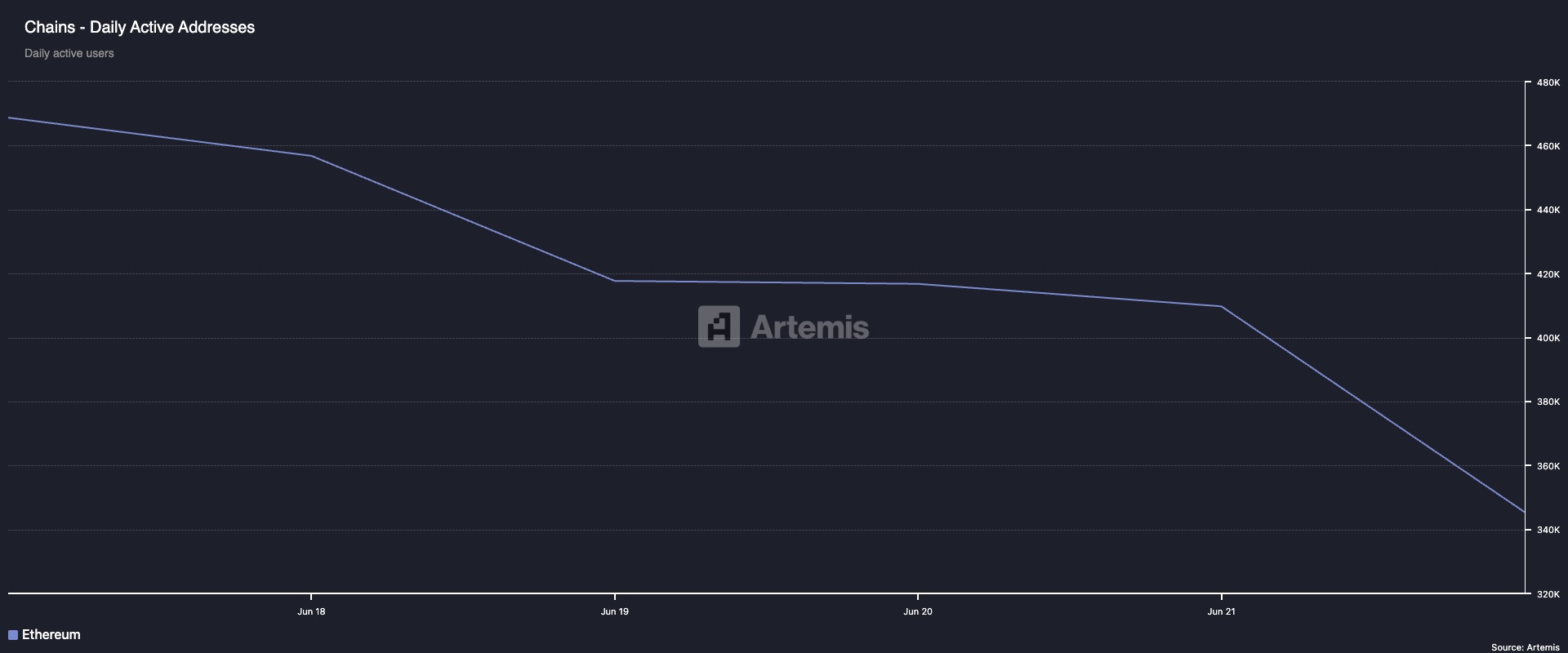 Ethereum Daily Active Addresses. Source:
Artemis
Ethereum Daily Active Addresses. Source:
Artemis
A decline in Ethereum’s daily active address count signals reduced engagement from users and developers on the network. It also suggests that fewer wallets are initiating transactions, deploying contracts, or interacting with the decentralized applications (dApps) on the L1.
This drop in participation often precedes a broader slowdown in network activity, reflected in Ethereum’s transaction count, which has also fallen. Per Artemis, it has dipped by 14% during the review period.
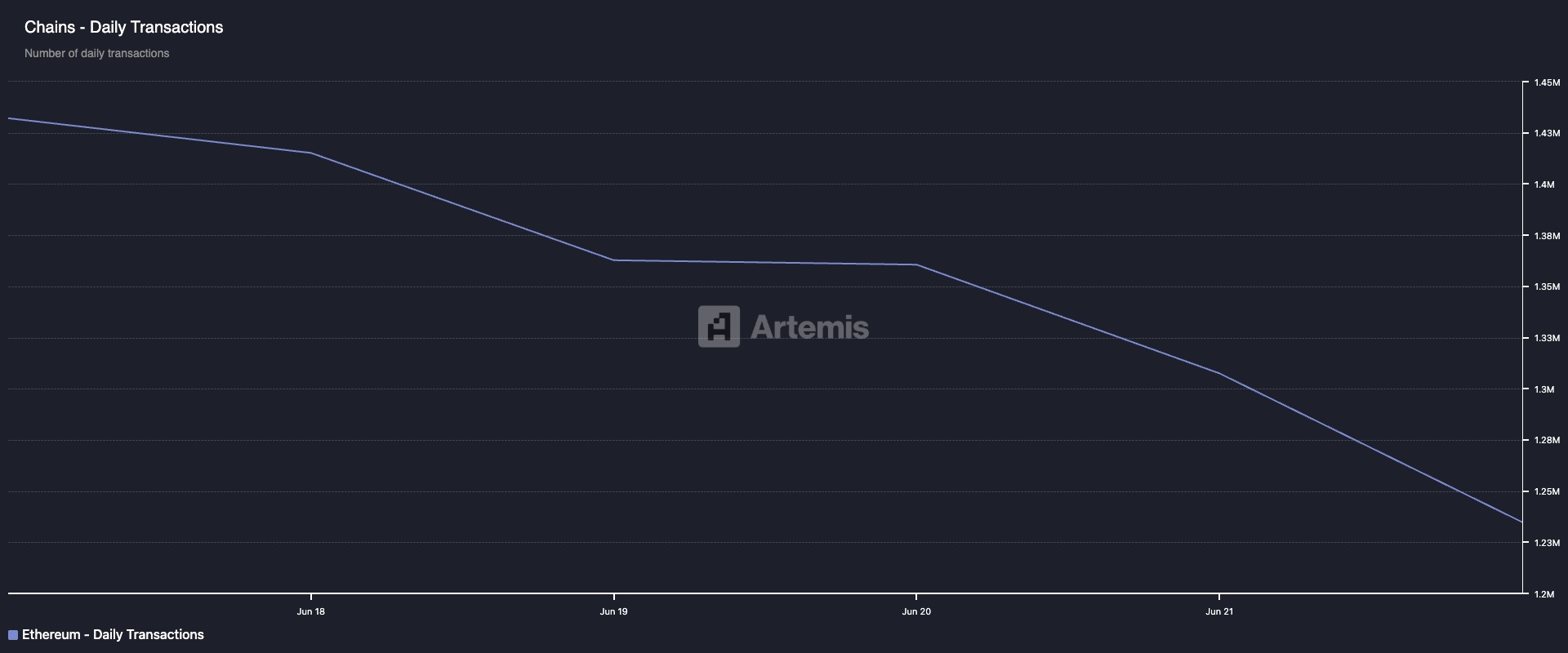 Ethereum Transactions Count. Source:
Artemis
Ethereum Transactions Count. Source:
Artemis
The decline in user engagement is mirrored by Ethereum’s shrinking DeFi TVL. At $57 billion at press time, this has plunged 10% over the past seven days.
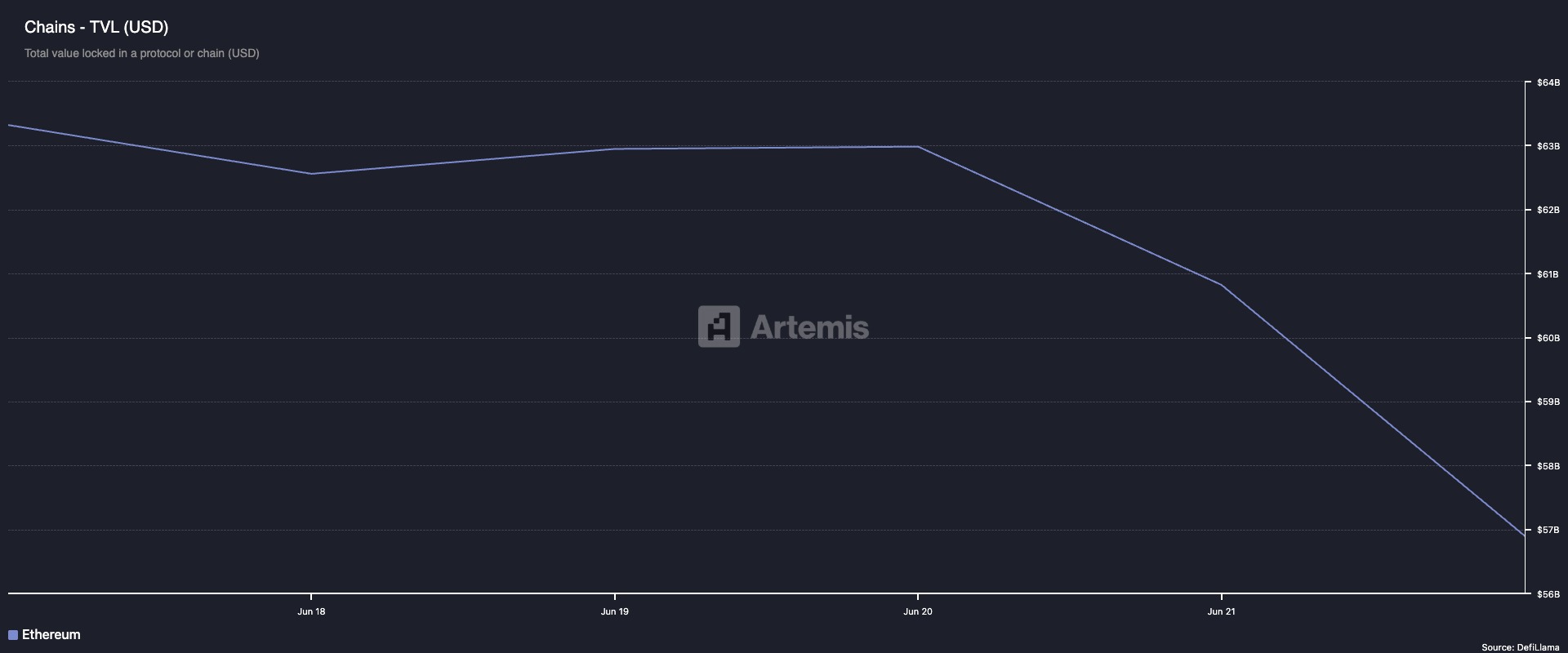 Ethereum TVL. Source:
Artemis
Ethereum TVL. Source:
Artemis
This pullback suggests that users are withdrawing funds or avoiding new deployments amid growing uncertainty, limiting liquidity across lending platforms, DEXs, and staking protocols.
With fewer transactions taking place, demand for ETH declines, dampening price momentum and contributing to the asset’s recent slump.
Ethereum Eyes $2,569 as Price and Volume Surge
Amid a broader market upswing, ETH has surged 8% over the past 24 hours, trading at $2,418 at the time of writing. Accompanying this price jump is a 7% rise in daily trading volume, now at $26 billion.
When both price and trading volume increase simultaneously, it signals growing investor confidence and stronger market participation. This suggests that real demand rather than speculative spikes drives ETH’s current price rally.
If this continues, ETH could breach $2,424 and climb toward $2,569. A successful break above this price level could send ETH’s price toward $2,745.
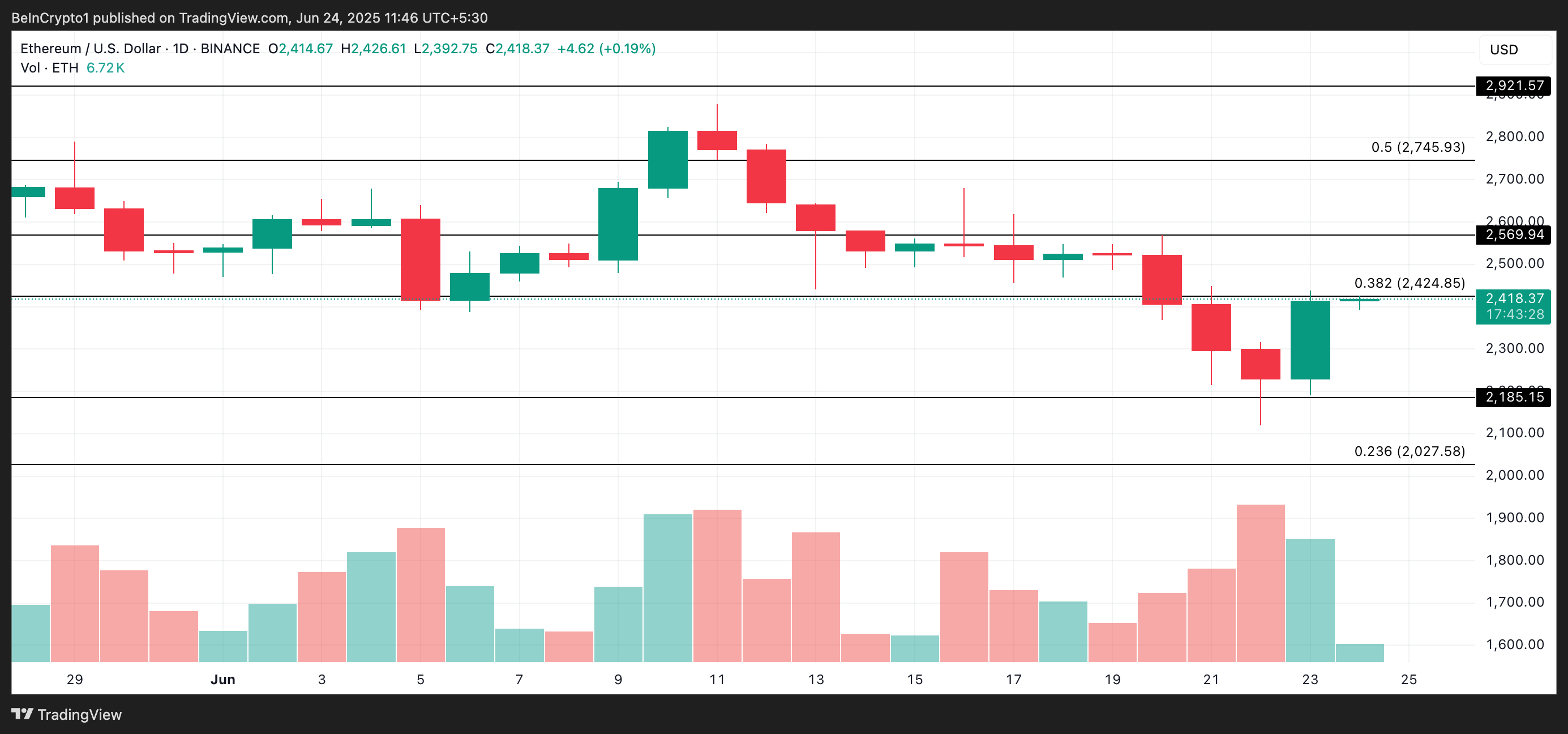 Ethereum Price Analysis. Source:
TradingView
Ethereum Price Analysis. Source:
TradingView
However, if selloffs continue, the coin will resume its decline, and its price could fall to $2,185.
Disclaimer: The content of this article solely reflects the author's opinion and does not represent the platform in any capacity. This article is not intended to serve as a reference for making investment decisions.
You may also like
The Capital Trends Behind the AI Computing Power Rebound: JPMorgan Fund Flows Reveal Retail Buy-In "Shrinking," Pouring Into Nvidia, SanDisk and Other Computing Power Core Companies
What has been revealed is not a "complete withdrawal of retail investors from AI," but rather a significant slowdown in overall market entry pace under macroeconomic pressure, with stock selections becoming more concentrated. In response to the Federal Reserve's unanimous decision to raise interest rates by 25 basis points, increasing the policy rate to 3.75%–4.00%, JPMorgan's assessment is: if this is simply a withdrawal of last year's "insurance-style rate cuts" during a shallow rate hike cycle—and if corporate earnings remain strong and the Middle East situation does not further spiral out of control—the stock market is still capable of absorbing rising interest rates.
Vote Result 7-2! Bank of Japan Raises Interest Rates at Fastest Pace Since 1990, Does Not Signal a Clearly More Hawkish Stance
The Bank of Japan has raised interest rates to 1.25%, marking the highest level since 1995 and the sixth increase since exiting the negative interest rate policy in March 2024. Out of the nine committee members, Asada and Sato voted against the hike, citing the current economic situation, reflecting ongoing internal disagreements over further tightening. In its statement, the Bank of Japan indicated it will continue to raise rates and adjust the degree of monetary easing, but the forward guidance language showed limited changes from the July statement, without sending notably more hawkish signals.
Crypto prices
More


