
ETF Inflows Nearly Halve as Bitcoin Slides Amid Market Caution | ETF News

Bitcoin ETF inflows dropped sharply as BTC slid below $104,000, signaling waning investor confidence. Reduced trading activity and bearish sentiment highlight a cautious outlook.
On Tuesday, Bitcoin exchange-traded funds (ETFs) recorded over $200 million in inflows. While this marked a net positive inflow into these funds, it also represented a sharp drop from the $421 million seen the day before.
The cooling interest comes as BTC slid to an intraday low of $103,371 on Tuesday, signaling growing caution among investors. If the decline persists, ETF inflows could weaken further, as institutional sentiment continues to take a hit.
BTC ETFs See Slump in Daily Inflows
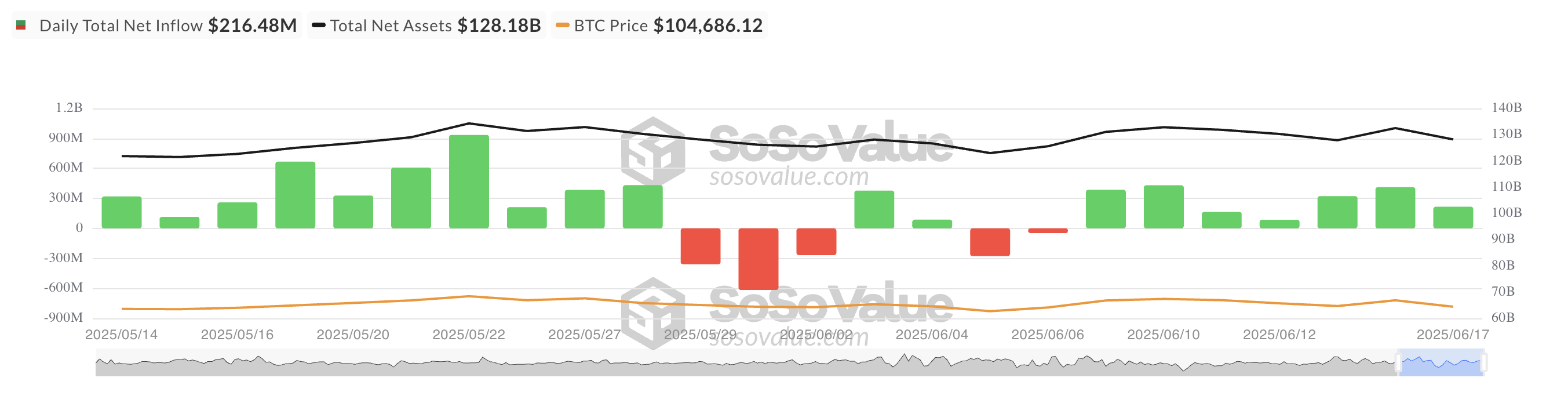
On Tuesday, US-listed spot Bitcoin ETFs recorded net inflows of $216.48 million, indicating that investor interest remains intact. However, this marked a steep 47% drop from the $412 million posted the day before, signaling a slowdown in momentum.
 Total Bitcoin Spot ETF Net Inflow. Source:
SosoValue
Total Bitcoin Spot ETF Net Inflow. Source:
SosoValue
The dip in inflows coincided with BTC’s price decline during the day’s trading session. It fell to an intraday low of $103,371 amid weakening demand. The downturn has weighed on market sentiment and appears to have stalled fresh capital from entering BTC-linked ETFs.
Yesterday, BlackRock’s IBIT led the pack with the highest daily inflows, totaling $639.19 million, bringing its total historical net inflow to $50.67 billion.
On the other hand, Fidelity’s FBTC witnessed the largest net outflow among these ETFs, with $208.46 million exiting the fund.
BTC Faces Renewed Pressure
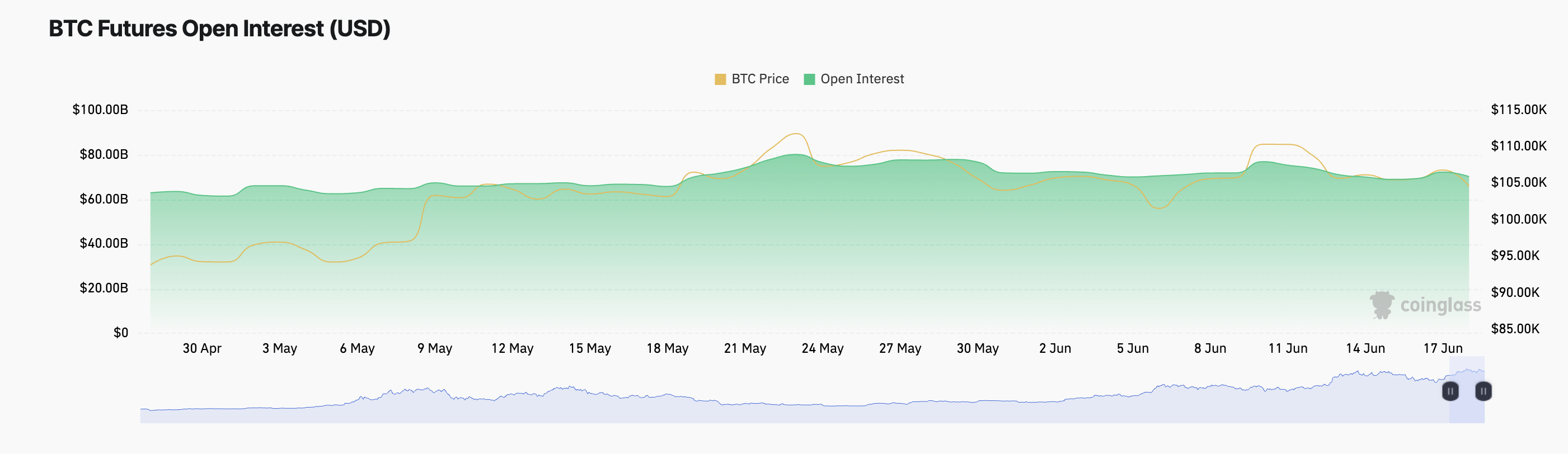
Today, BTC has extended its downward trend, shedding another 2% as the broader crypto market faces renewed selling pressure. The price decline has been accompanied by a dip in the coin’s futures open interest (OI), suggesting a slowdown in leveraged trading activity.
This stands at $70.24 billion at press time, dropping by 3% over the past day. This pullback signals that traders are reducing their exposure and possibly closing out positions, a trend reflecting growing market caution.
 BTC Futures Open Interest. Source:
Coinglass
BTC Futures Open Interest. Source:
Coinglass
Open interest refers to the total number of outstanding futures contracts that have not yet been settled. When it falls during a price dip like this, it indicates that traders are exiting positions rather than opening new ones. This is a sign of weakening conviction and reduced speculative appetite among BTC futures traders.
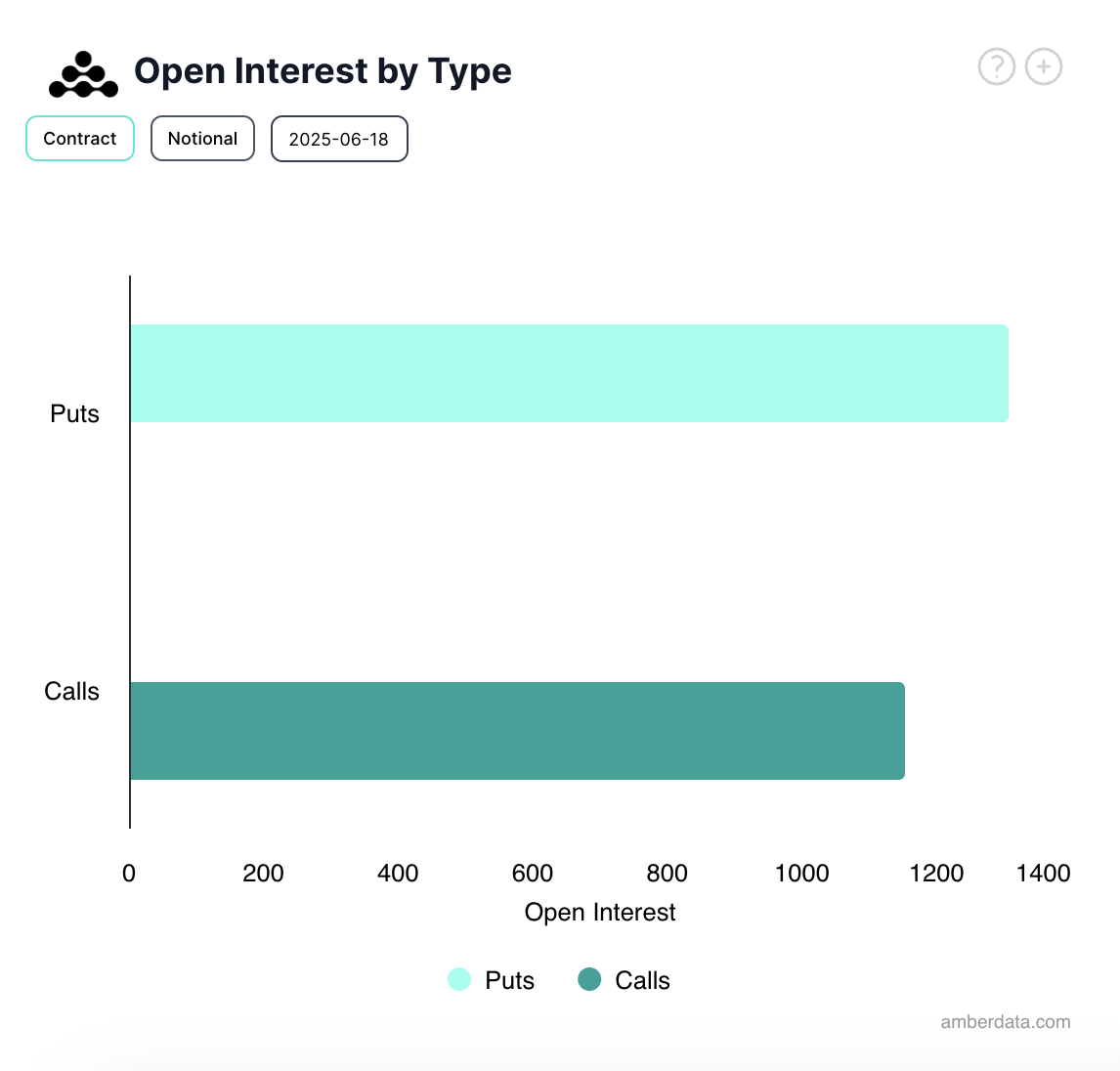
Furthermore, bearish sentiment continues to dominate the options market, as evidenced by the heightened demand for put contracts over calls, per Deribit. This imbalance suggests that a growing number of traders are positioning themselves to profit from further downside in BTC’s price.
 Bitcoin Options Open Interest. Source:
Deribit
Bitcoin Options Open Interest. Source:
Deribit
The combination of cooling ETF inflows, declining open interest, and a bearish tilt in the options market suggests that while institutional interest has not vanished, the drop in capital flows and trading behavior means many investors are gearing for further downside, or at least waiting for clearer signals before re-entering the market.
Disclaimer: The content of this article solely reflects the author's opinion and does not represent the platform in any capacity. This article is not intended to serve as a reference for making investment decisions.
You may also like
Analytics Firm Says “Early Bull Run Has Begun” for Bitcoin and Shares What It Expects Next
Australian and New Zealand Dollars dig in ahead of a Japanese rate hike
Turkey Implements Multi-Pronged Emergency Measures: Nearly $20 Billion Fund Liquidation, Executives Arrested, Trading Ban
The Turkish Finance Minister stated that the risks are "temporary and controllable." Regulators will liquidate over one hundred funds managed by seven asset management companies, with portfolios involving more than 350,000 investors. Criminal charges have been filed against 38 individuals, along with a two-year trading ban. Several senior executives from financial institutions have been arrested, detained, or restricted from leaving the country. The central bank increased repo financing, relaxed capital requirements for banks, and raised the interbank money market borrowing limit to ten times its previous level. On Thursday, the Turkish bank stock index surged over 9%, while many small and mid-cap stocks continued to decline.
Crypto prices
More


