
Pi Network (PI) Faces Market Standoff, Prepares for Breakout

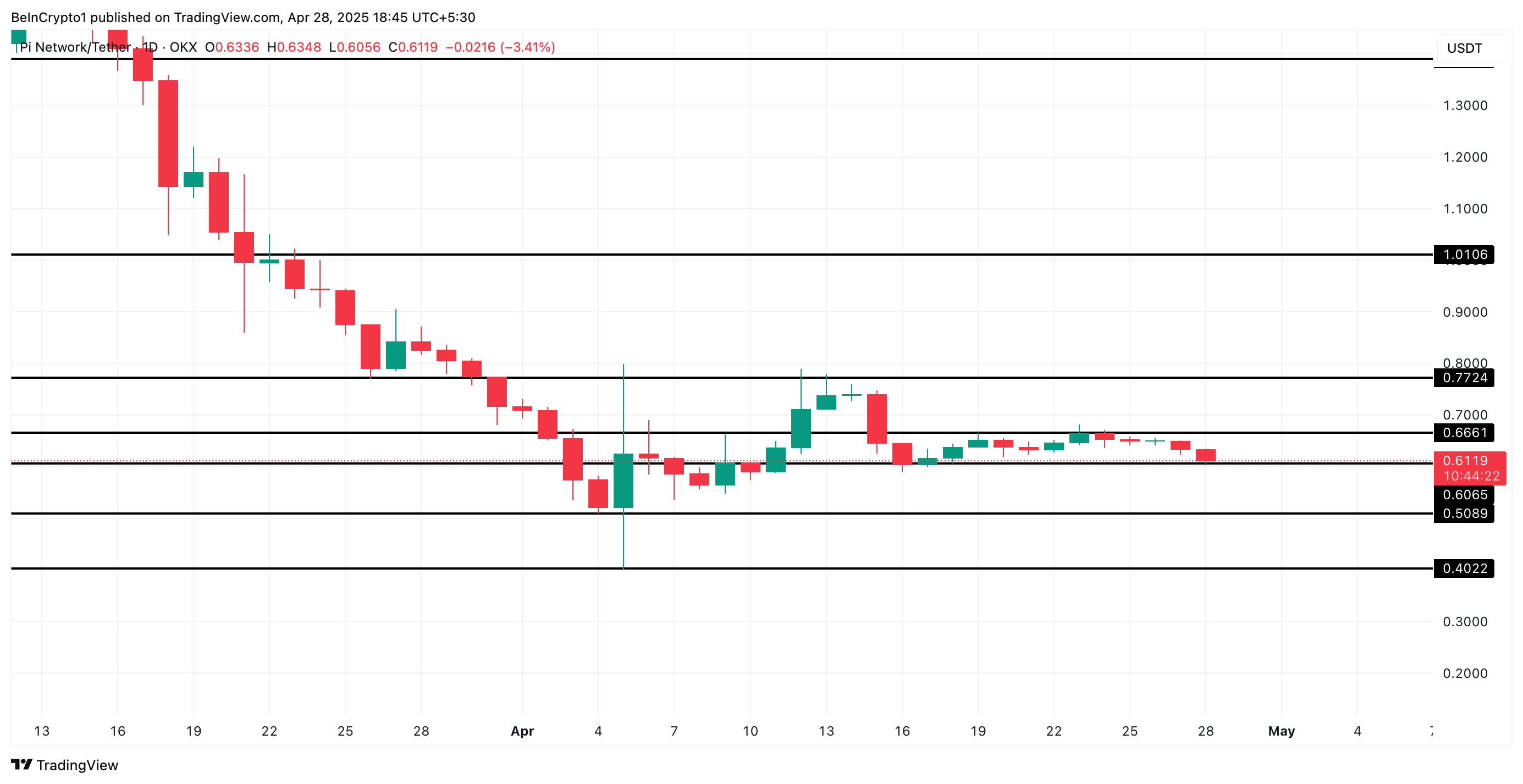
Pi Network’s PI token is currently in a consolidation phase, with its price stuck between $0.60 and $0.66. Market volatility is low, and a breakout in either direction could lead to significant price movement.
Pi Network’s PI token seems to have entered a consolidation phase, as the price action has leveled off. Since April 16, the token has faced resistance at $0.66 while finding support at $0.60, creating a narrow trading range.
This signals a period of indecision in the market, with neither PI buyers nor sellers taking full control.
PI’s Price Action in Limbo
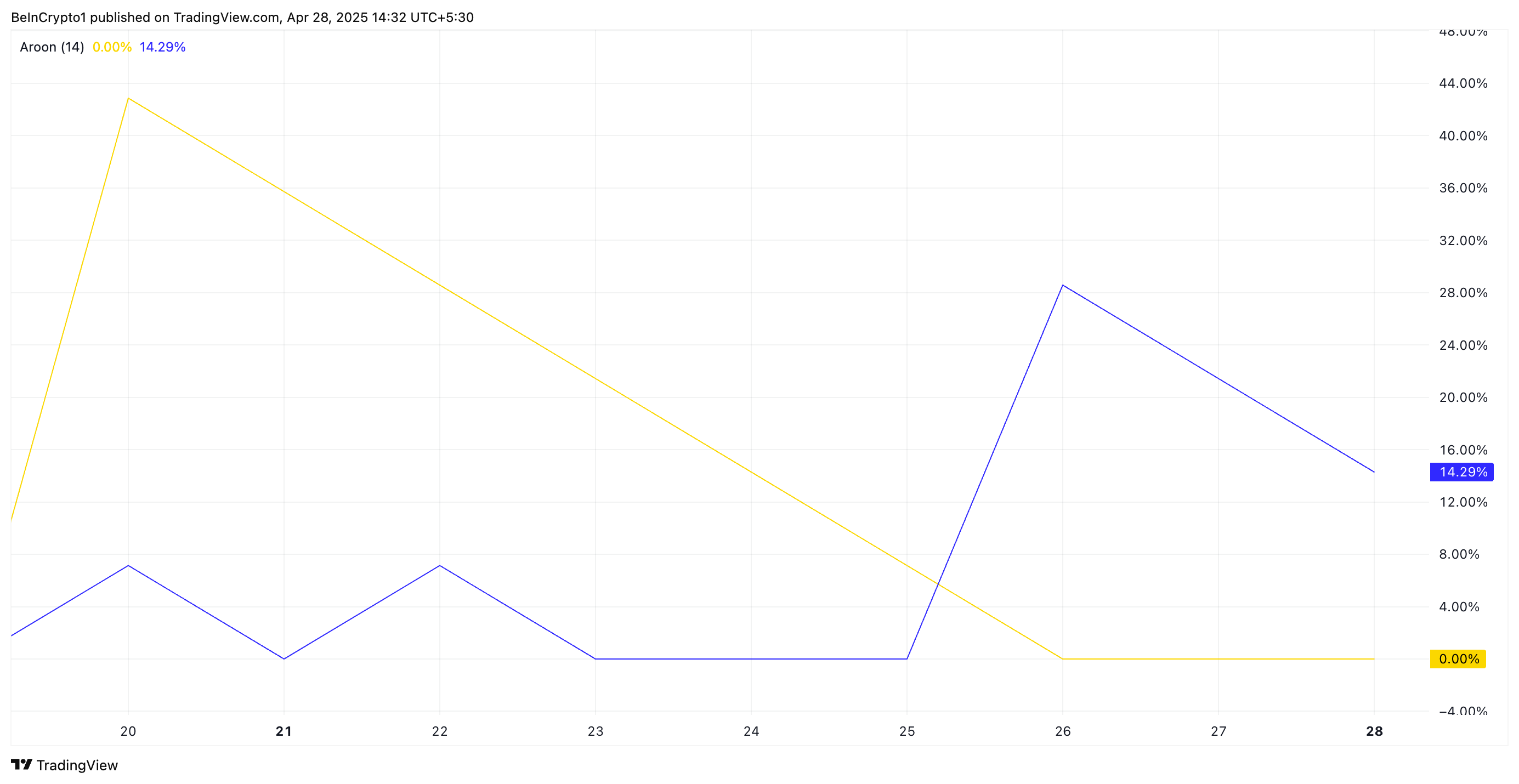
Readings from PI’s Aroon indicator confirm the recent stagnation in its price. As of this writing, the token’s Aroon Up Line (yellow) is at 0%, while its Aroon Down Line (blue) is in decline at 14.29%.
 PI Aroon Indicator. Source:
TradingView
PI Aroon Indicator. Source:
TradingView
The Aroon indicator identifies market trends and determines whether a trend is strong or weak.
A 0% reading on the Aroon Up Line suggests that PI has not reached a new high recently, signaling a lack of upward momentum. Meanwhile, the Aroon Down Line’s decline to 14.29% indicates that the token has not been experiencing significant downward pressure either.
This trend suggests a balanced market, where neither bulls nor bears are taking the lead. The setup confirms that PI is in a consolidation phase, with a breakout in either direction dependent on shifts in market sentiment.
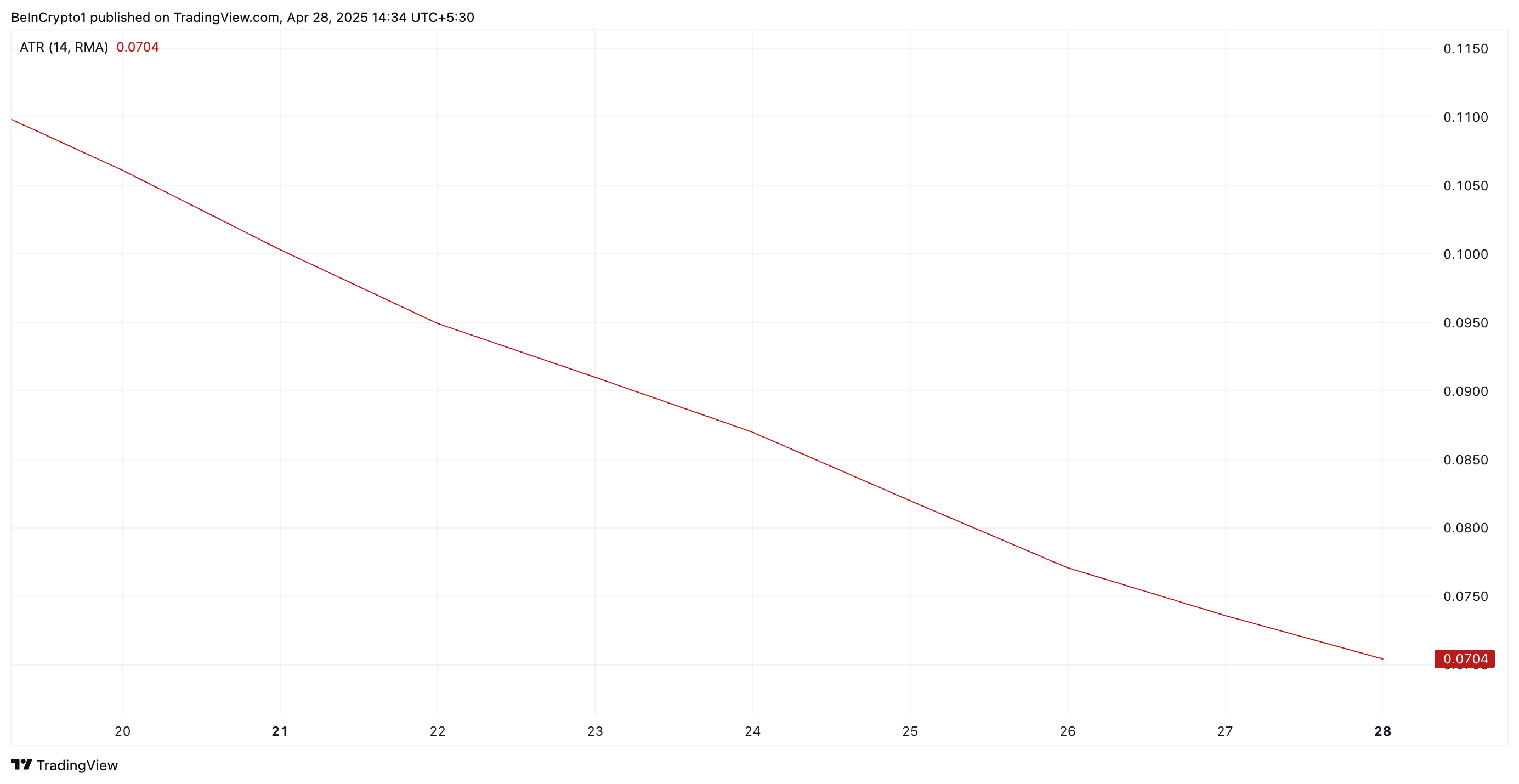
Further, the steady decline in PI’s Average True Range (ATR) since early March confirms the decrease in its market volatility and the shift towards consolidation. At press time, this indicator stands at 0.07.
 PI Average True Range. Source:
TradingView
PI Average True Range. Source:
TradingView
The ATR indicator measures market volatility by calculating the average range between the high and low prices over a set period. When it falls like this, it indicates a decrease in market volatility, suggesting that price movements are becoming less erratic.
This often signals a period of consolidation or indecision in the market, as traders await a potential breakout or shift in direction. For PI, this is evident as both buyers and sellers hesitate, waiting for a catalyst to drive their next moves.
Will Bullish Momentum Drive PI to $1 or Will Bears Retake Control?
A breakout—whether to the upside or downside—could signal the start of a new trend, making PI a token to watch in the coming days. If bullish pressure soars and demand for the altcoin spikes, its price could witness a rally and attempt to break above the resistance at $0.66.
A successful breach of this level could propel PI’s price to $1.
 Pi Price Analyses. Source:
TradingView
Pi Price Analyses. Source:
TradingView
Conversely, if the bears regain full control and selloffs resume, PI could break below the support at $0.60 and fall to $0.50.
Disclaimer: The content of this article solely reflects the author's opinion and does not represent the platform in any capacity. This article is not intended to serve as a reference for making investment decisions.
You may also like
The 5% U.S. Treasury yield storm is coming! The refinancing time bomb countdown begins—who will be the first victim?
The 10-year US Treasury yield has surpassed 5%, reaching a new high since 2007. The longer high interest rates persist, the greater the refinancing pressure will be on real estate companies, commercial real estate, and highly indebted firms, with systemic risks likely to accelerate and emerge within the next 12 to 18 months.

Don't Fight the Profit Cycle! Will U.S. Stocks Break 8,000 Points This Year?
Jefferies predicts that, driven by the dual engines of the AI investment boom and stronger-than-expected corporate earnings, the S&P 500 index is expected to soar to 8,000 points by the end of 2026 and further reach 9,000 points in 2027. AI-driven profit expansion has spread from the "Magnificent Seven" to the entire market, with the S&P 500's EPS forecast to surge by 35% this year, far exceeding market consensus—marking the strongest earnings supercycle since 1995! The only real threat: if US Treasury yields continue to spike, the risk of valuation compression cannot be ignored.
Will “continual learning” AI extend the memory “shortage” until 2031?
Citi believes that as AI enters the era of "continuous learning" beyond simple training and inference stages, demand for HBM, server DDR5, and enterprise SSDs (eSSD) will experience explosive and simultaneous growth starting from 2027. While demand will surge rapidly, the supply side is constrained by HBM production capacity usage and slower technology migration, leading to expansion lagging far behind demand. This supply-demand imbalance is expected to continue until 2031.
Crypto prices
More


