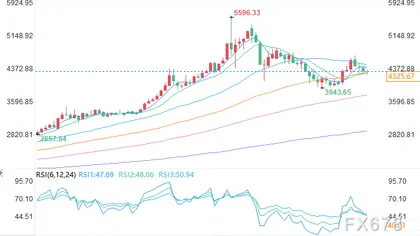
- New XRP addresses reach two-week high of 3,677.
- Liveliness metric drops to 0.81, signalling reduced selling pressure.
- RSI at 60.10 indicates strong buying momentum
XRP has recorded an impressive 10% rise over the past week, trading at $2.32 at the time of writing.
The surge comes amid a broader market recovery, as traders return and long-term holders pull back from selling.
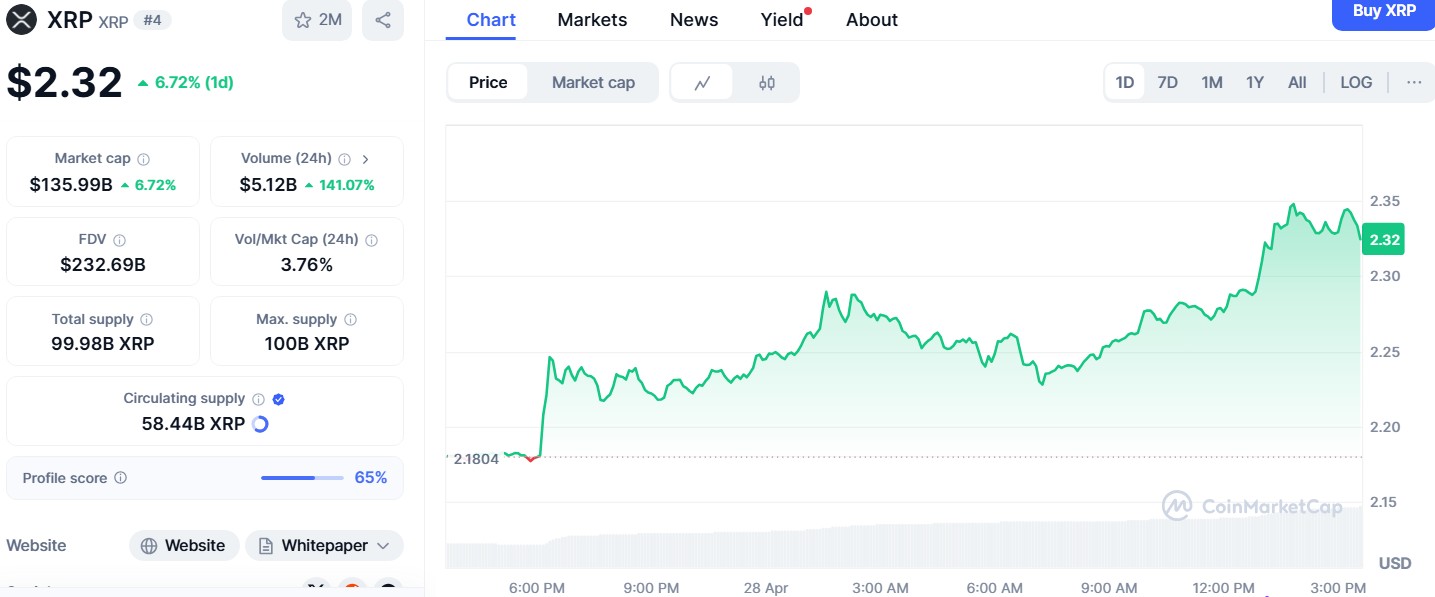
Source: CoinMarketCap
Market data suggests fresh inflows and reduced selling pressure are key drivers behind XRP’s latest momentum.
If current trends continue, the token could soon test higher price levels, although volatility risks remain.
As major cryptocurrencies stabilise, XRP’s relative strength could position it as one of the altcoins to watch in the coming weeks.
New XRP addresses hit two-week high, boosting market activity
Data from Glassnode reveals that the number of new XRP addresses surged to a two-week high of 3,677 on 28 April.
This increase indicates rising interest from new participants, as inflows of fresh capital support XRP’s price movement.
A rise in newly created addresses often signals heightened market activity, which can add further stability to an asset’s upward trajectory.
The growing number of new addresses suggests that XRP is attracting not only existing crypto investors but also new entrants to the market, broadening its user base during this phase of recovery.
Along with this, the drop in XRP’s Liveliness metric to 0.81, the lowest since 1 December, indicates that long-term holders (LTHs) are refraining from transferring or selling their tokens.
A falling Liveliness score typically reflects increased conviction among holders, suggesting a more resilient market structure for XRP at present.
XRP holders show confidence amid reduced selling pressure
The behaviour of XRP LTHs has played a significant role in the token’s price action.
LTHs, defined as addresses holding XRP for more than 155 days, have significantly reduced their selling activity over the past week.
This reduction in selling pressure provides a supportive environment for price gains, reinforcing the asset’s bullish momentum.
Historically, lower Liveliness levels have coincided with periods of stronger price performance, as reduced token circulation often results in decreased supply pressure on the market.
The recent drop to 0.81 further underscores the growing confidence among investors that XRP could sustain its rally.
Should this trend continue, XRP’s ability to retain long-term investor interest could become a key factor driving future price performance.
XRP RSI rises to 60, eyes resistance at $2.29
Technical indicators also point to positive sentiment. XRP’s Relative Strength Index (RSI) has climbed to 60.10 on the daily chart, confirming the ongoing bullish momentum.
The RSI tracks buying and selling strength, ranging from 0 to 100. Typically, readings above 70 signal overbought conditions, while levels below 30 suggest the asset is oversold.
At 60.10, XRP remains in a strong buying phase, although not yet in the overbought territory.
If buying pressure persists and XRP breaks through its current resistance at $2.29, analysts suggest it could rally towards the $2.50 mark in the near term.
Sustained interest from new entrants combined with continued confidence from existing holders could play a pivotal role in maintaining momentum.
However, if selling activity resumes, XRP risks retracing recent gains, with a potential decline back towards the $1.99 support level.
Traders are closely monitoring these levels to gauge the next significant move.