Bitget App
Trade smarter
Buy cryptoMarketsTradeFuturesEarnSquareMore
Investors just don’t care about Ethereum as much as Bitcoin

Investors just don’t care about Ethereum as much as Bitcoin

Cryptopolitan2024/07/27 03:40
By:By Jai Hamid

Share link:In this post: Ethereum ETFs struggled with high fees and investor disinterest, leading to major sell-offs. Investors weren’t excited by Ethereum’s complicated image and the lack of staking options in the new ETFs. Bitcoin stole the spotlight with excitement around Trump’s speech and high market anticipation for price movements.Disclaimer. The information provided is not trading advice. Cryptopolitan.com holds no liability for any investments made based on the information provided on this page. W

The recent launch of spot Ethereum ETFs was supposed to be a game-changer. However, it seems investors are more interested in Bitcoin, leaving Ethereum in the dust. 

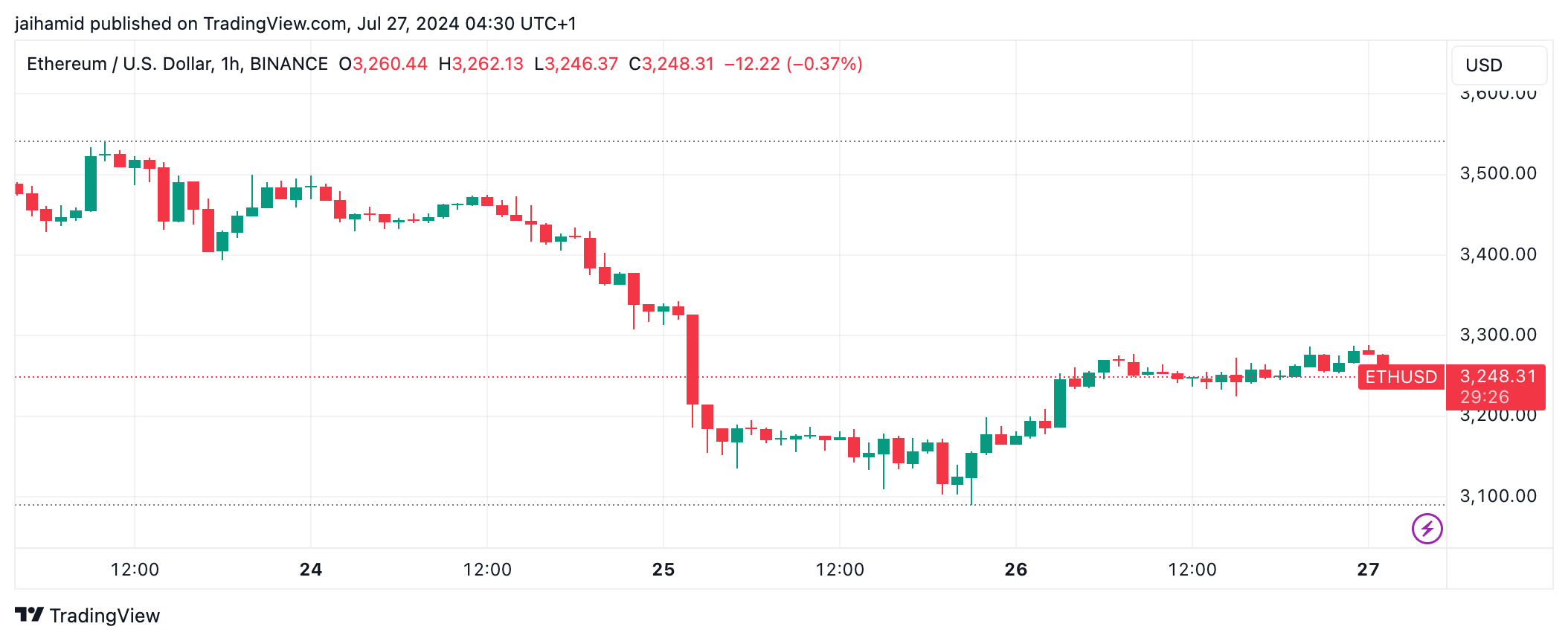
The first week of trading saw Ethereum’s price drop from $3,563 to $3,086, echoing the Bitcoin spot ETF launch.

So, why did this happen? One big reason is Grayscale’s 2.5% fee on their Ethereum ETF. This steep fee is driving investors away. 

In just four days, there were $178 million in net outflows from the eight ETFs, with Grayscale alone responsible for $1.16 billion of that. 

Even with a new Mini ETF offering a lower fee of 0.15%, the net outflows continued, with only 10% of the original ETHE converting to ETH.
Investors just don’t care about Ethereum as much as Bitcoin image 0

Ethereum’s struggle to stand out

QCP’s latest analysis says another issue is the classic “buy the hype, sell the news” situation. 

Investors piled in before the ETF launch, hoping for a big rally. But when that didn’t happen, they quickly sold off their holdings.

Ethereum’s main problem is its abstract nature. Unlike Bitcoin, which is often called digital gold, Ethereum doesn’t have a simple tagline that appeals to traditional finance folks. 

See also SEC Chair Gensler may resign by early 2025: report

This makes it harder for new investors to understand and get excited about. Another drawback is the lack of staking features in these ETFs. Staking is a big part of Ethereum’s appeal, offering rewards to holders. 

Without it, there’s less incentive for investors to buy in. This has led to a lukewarm reception for the spot Ethereum ETFs, despite the initial excitement.
Investors just don’t care about Ethereum as much as Bitcoin image 1

Bitcoin steals the spotlight

While Ethereum was busy struggling, Bitcoin stole the show in the options market. The excitement’s now all about Donald Trump’s speech, which had everyone in the market on edge. 

QCP says implied volatility for options expiring on July 28 was at 85, almost double the realized volatility, showing how much anticipation there was.

Big funds were placing bets on a big move, with some positioning for a breakout after Trump’s speech and the upcoming Federal Open Market Committee (FOMC) meeting. 

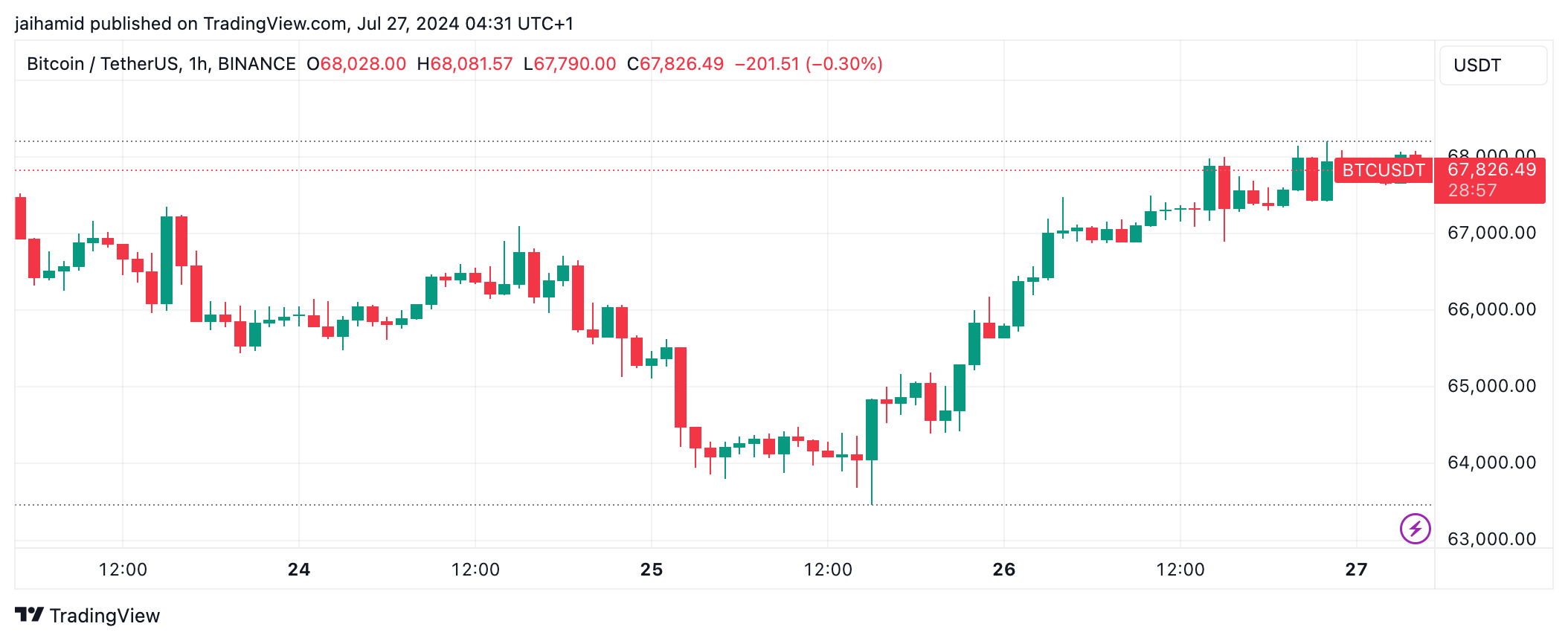
One bullish strategy, dubbed “The Trump Card,” involved selling a 65k put and buying a 70/72/74k call fly. If Bitcoin hits $72k by August 2, investors could see a return of 701.9% per year.

See also Ethereum (ETH) may remain under pressure on Grayscale selling

There was also a bearish strategy, “Sell The News,” aiming to profit if Bitcoin ended up between 65k and 63k. QCP says this approach would offer a 3x return on the premiums spent if Bitcoin lands within this range.
Investors just don’t care about Ethereum as much as Bitcoin image 2

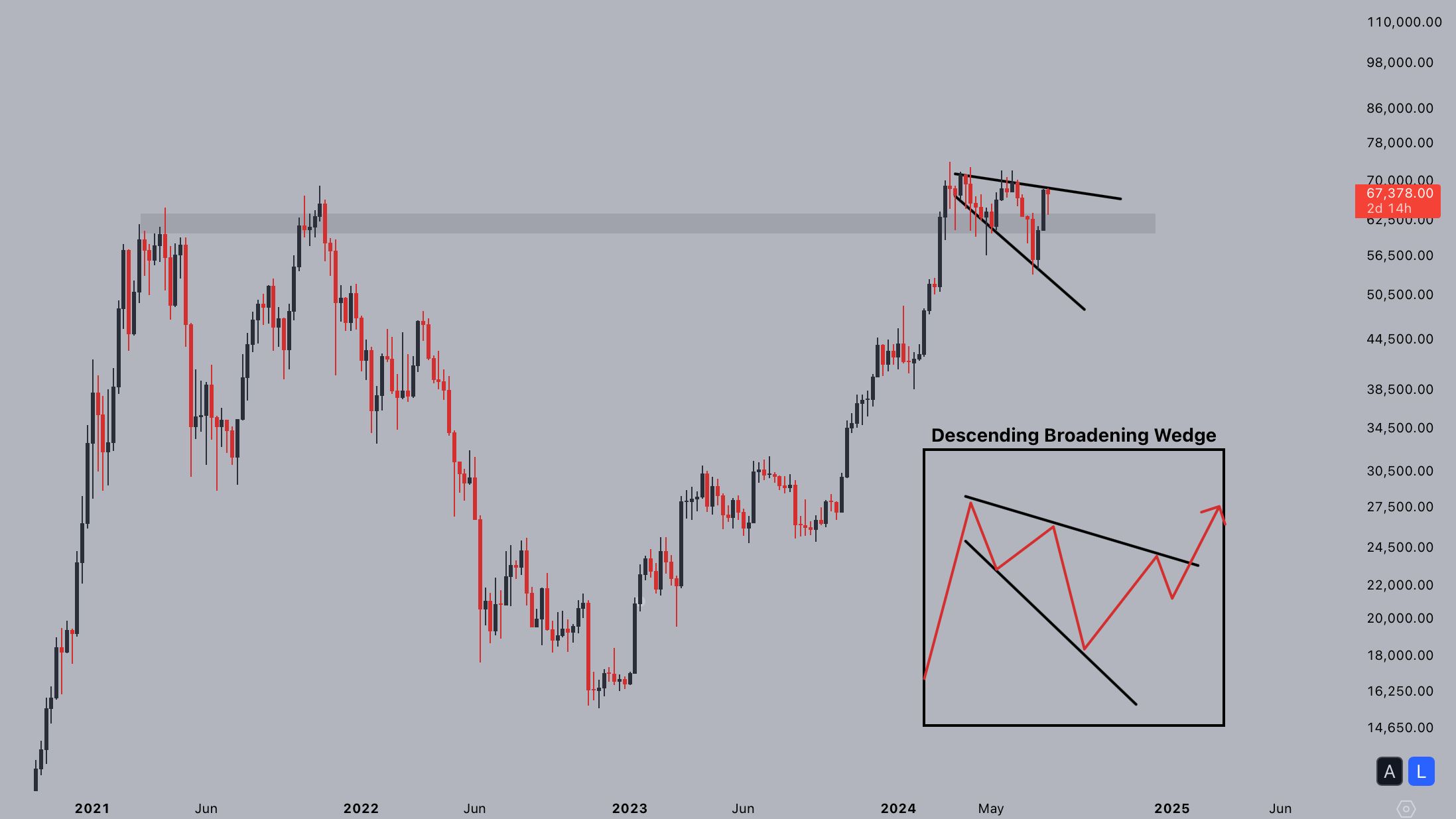
Adding to the excitement, a crypto trader named Jelle pointed out a massive descending broadening wedge forming around Bitcoin’s previous cycle highs. According to Jelle, if Bitcoin breaks out, it could sharply move to $85,000.

At the time of writing, Bitcoin was priced at $67,829, while Ether was at $3,248.
0
0

Disclaimer: The content of this article solely reflects the author's opinion and does not represent the platform in any capacity. This article is not intended to serve as a reference for making investment decisions.

Understand the market, then trade.
Bitget offers one-stop trading for cryptocurrencies, stocks, and gold.
Trade now!

You may also like

Berkshire Hathaway, under Abel’s leadership for six months, significantly increases its holdings in Google; Class A shares rise to top five positions, with Q2 adding to airline and real estate stocks

In the second quarter, Berkshire Hathaway's holdings in the two classes of Alphabet, Google's parent company, increased by more than $17 billion in total market value. Among them, Class C shares rose more than sixfold from the first quarter, making it into the top ten holdings for the first time, while Class A shares increased by 45% and became the fourth-largest holding. The stake in Delta Air Lines, a new position in the first quarter, was increased by 44%, with an additional $2.6 billion in market value. The holding in real estate stock Lennar grew by 25%. Meanwhile, Berkshire further reduced its position in Bank of America, with a decrease of $1.72 billion in market value for the quarter; Capital One, a financial stock, was cut by 58%, and the holding in steel company Nucor was halved. Apple remained the top holding, with the position unchanged for two consecutive quarters.

华尔街见闻2026/08/14 21:41

AI financing concerns ferment, Broadcom plunges 7% intraday, $370 billion potential risk rings alarm

According to estimates by Bank of America, Broadcom’s chip financing projects could result in approximately $370 billion in senior debt by mid-2029, providing funding for 20GW of computing power, with around $150 billion in new debt potentially being added in 2027 alone. While Bank of America does not question Broadcom’s business fundamentals, the market is beginning to realize that if future AI computing power demand increasingly depends on massive financing platforms, the valuation logic of the AI industry chain must also simultaneously consider asset residual value, customer default rates, debt costs, and supplier guarantee obligations.

华尔街见闻2026/08/14 21:31