
Bitcoin breaks through $71,000 to fresh highs

The price of bitcoin has risen above the $70,000 price point.This is the second time this has happened in its history.
Bitcoin has broken above the $70,000 mark for the second time in the last few days, first surpassing this milestone on March 8.
Bitcoin’s price reached a high above $70,000 then, followed by a swift pullback to the mid-$68,000 range. Over a few days later, it has rebounded to $71,000, setting all-time highs.
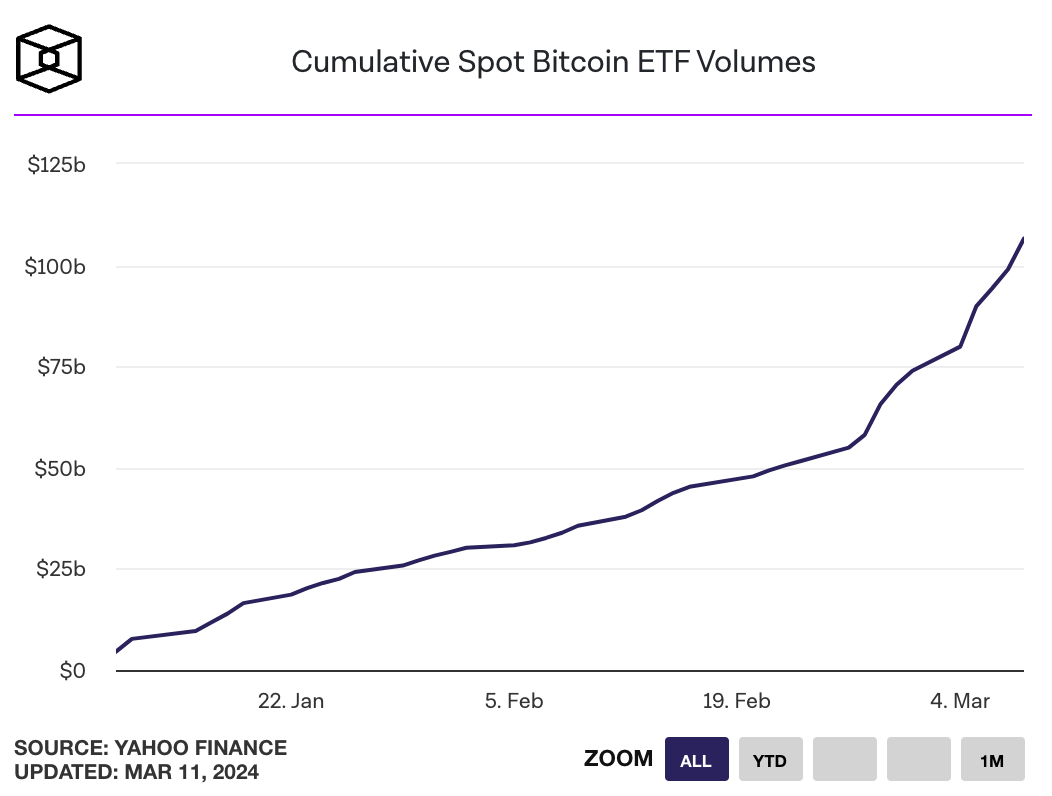
Bitcoin’s latest rally has been spurred by the arrival of spot Bitcoin ETFs in the US. These ETFs have acquired an additional 177,000 bitcoins since they launched, on top of the 621,000 that Grayscale’s Bitcoin Trust — now an ETF — already had, managing 4% of all bitcoins in circulation.
The amount of bitcoin entering circulation is also set to drop in little over a month's time. The Bitcoin halving is currently estimated for April 19 but that is subject to change. This will see block rewards drop from 12.5 bitcoin per block to 6.25. This will reduce the amount of bitcoin issued by day by around 900 bitcoin, worth around $73 million.
Meanwhile, the largest cryptocurrency, ether (ETH), is trading shy of $4,000 , up 1.2% today at around $3,990. The GM 30 Index , representing a selection of the top 30 cryptocurrencies, has increased by 1.75% to 154.6 in the past 24 hours.
Disclaimer: The content of this article solely reflects the author's opinion and does not represent the platform in any capacity. This article is not intended to serve as a reference for making investment decisions.
You may also like
XRP breaks consolidation, whales add 190 million coins amid 22% weekly surge
Arbitrum RWA holders cross 10K – Can ARB extend its 16% rally?
3 Best Cryptos to Invest in August 2026 for Long-term Gains

Can the Bank of Japan's "twist operation" really suppress long-term interest rates? Goldman Sachs: Fiscal issues are the real root cause, and term premium may persist for a long time.
Goldman Sachs pointed out that the factors driving the recent rise in long-term U.S. yields include the U.S. fiscal deficit, inflation uncertainty, large-scale AI-related debt issuance, and market concerns about an increase in the equilibrium real interest rate. Meanwhile, Treasury repo operations and adjustments in issuance structure do not affect these factors. Therefore, Goldman Sachs believes that this intervention can only temporarily relieve pressure and cannot change the trend direction of long-term yields.
Crypto prices
More


