
Is SHIB Preparing for a Massive Move? Three Things to Watch This Week (Shiba Inu Price Analysis)

Shiba Inu is currently in a flat trend, but this could be the calm before the storm.
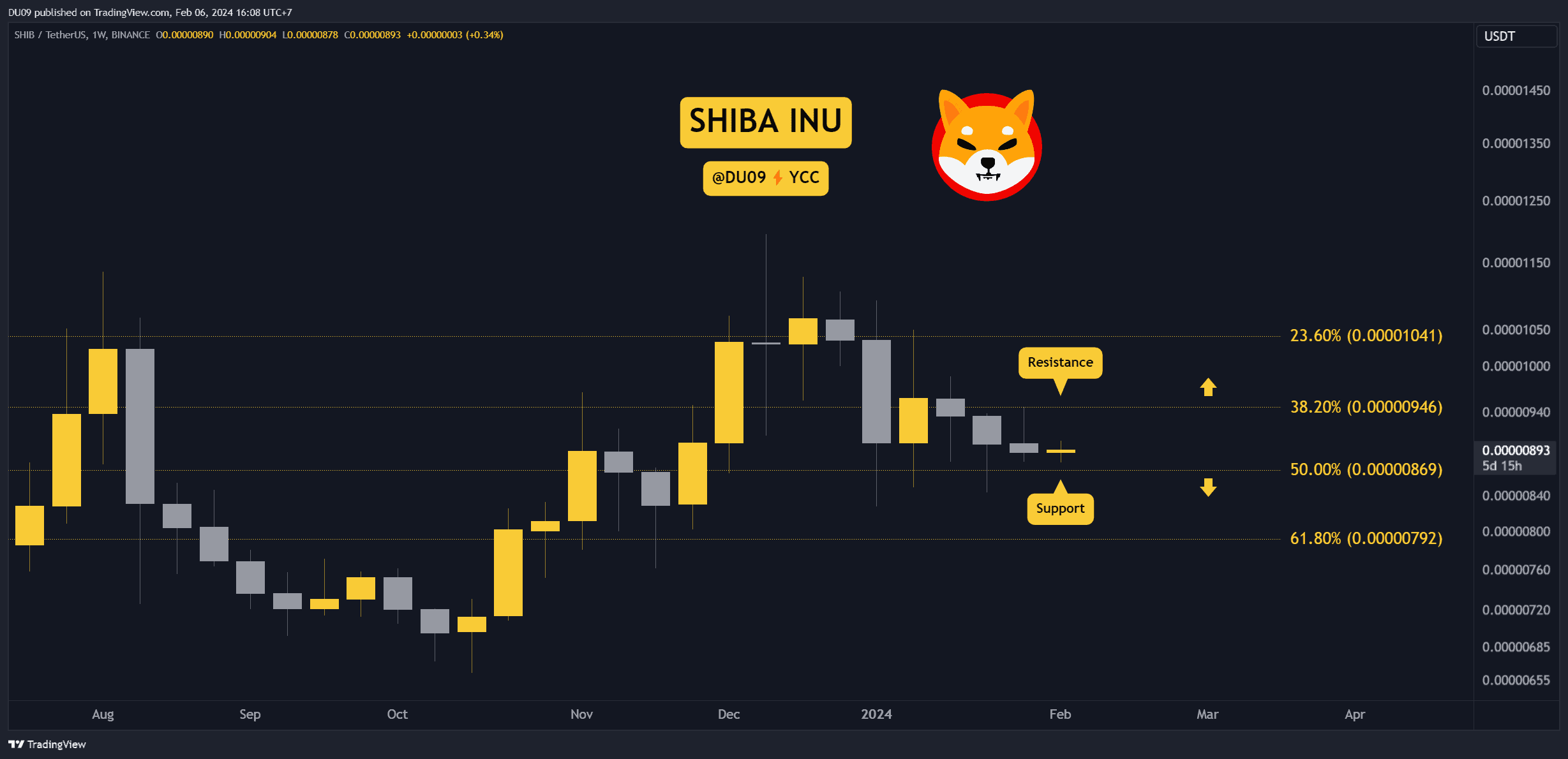
Key Support levels: $0.0000087
Key Resistance levels: $0.0000095
1. Flat Price Action
In the past two weeks, SHIB’s price has been moving sideways between the key levels. So far, the support at $0.000087 has held well and buyers could attempt to challenge the resistance at $0.0000095 in the near future.
2. Volatility and Volume Decreasing
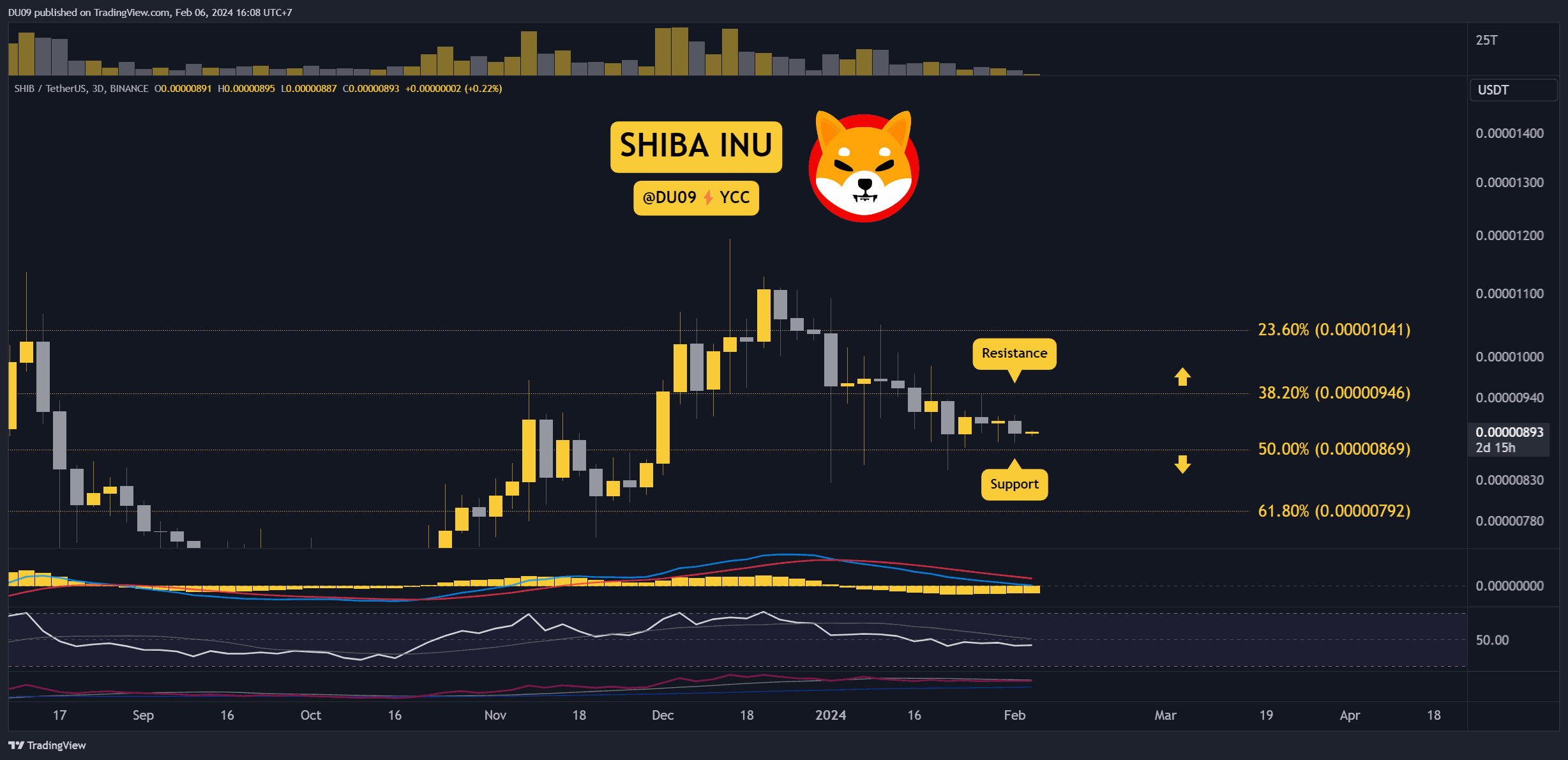
Since the most recent high in December, Shib Inu’s volume has been declining. Most recently, volatility has also decreased substantially, with barely any significant moves. This could indicate pressure is building up for a major move later on.
3. MACD Moving Sideways
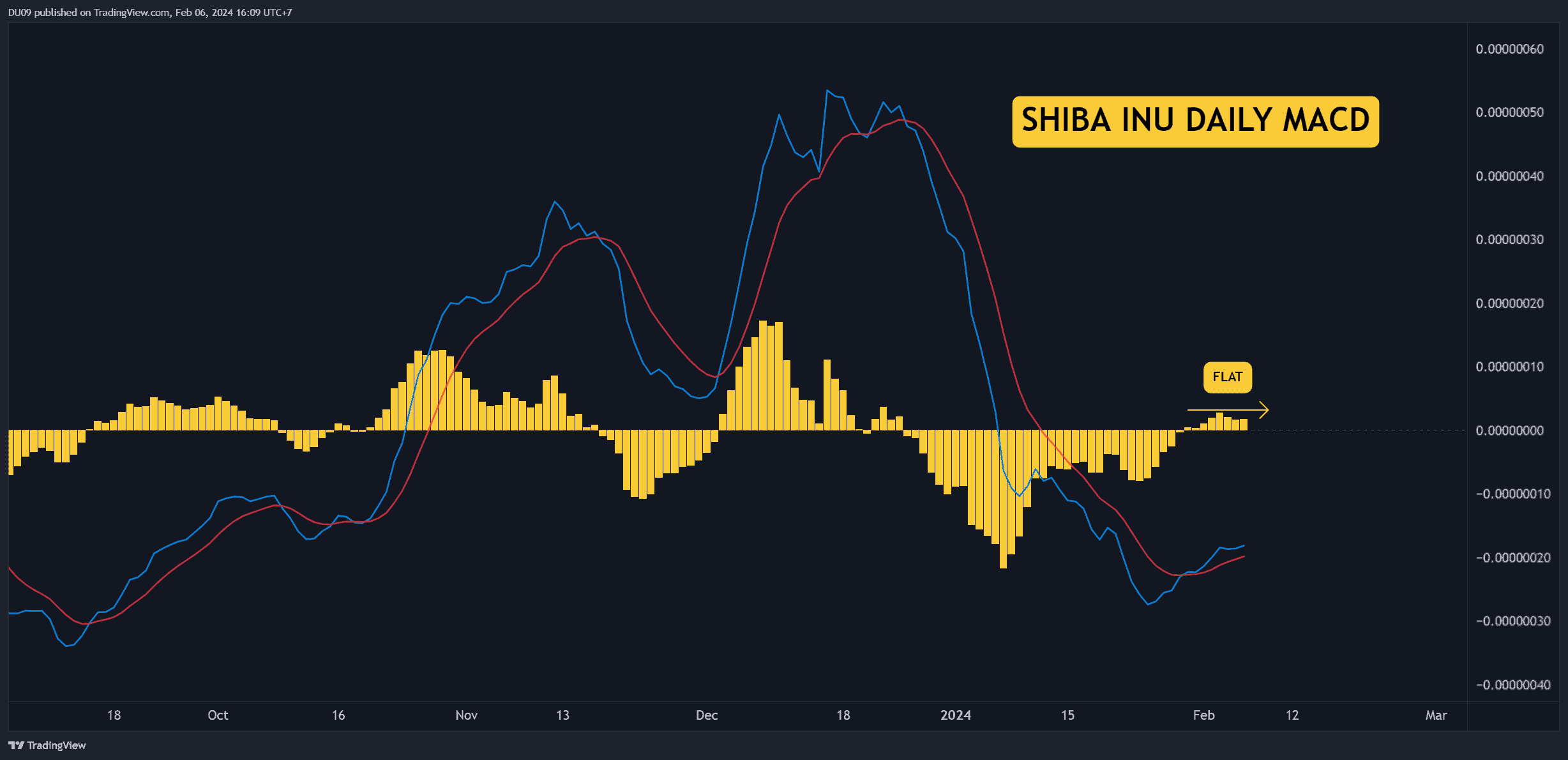
The MACD histogram on the daily timeframe is flat. This is expected, considering the price has been moving sideways for some time. Nevertheless, the MACD moving averages painted a bullish cross in late January, which is a promising sign for buyers.
Bias
The bias for SHIB is neutral.
Short-Term Prediction for SHIB Price
Buying volume has to return to SHIB if the price is to move higher. Until that happens, this sideways movement is likely to persist.
Disclaimer: The content of this article solely reflects the author's opinion and does not represent the platform in any capacity. This article is not intended to serve as a reference for making investment decisions.
You may also like
"Bond Market Storm" Sweeps the US, Europe, and Japan, Long-term Bond Yields Approach Decades-high Levels
The yield on the US 30-year Treasury bond has reached its highest level since 2007, while the yield on French bonds of the same maturity has climbed to its highest point since 2008. The yield on German 30-year bonds has returned to levels last seen in 2011, and the yield on equivalent UK gilts is approaching 6%. Meanwhile, the yield on Japan’s 30-year government bond has risen to its highest since 1999. This wave is driven by threefold pressures: inflation concerns, fiscal expansion, and a structural decline in demand—with real yields being the main factor.

EU regulatory pressure yields results: Apple (AAPL.US) significantly adjusts European App Store fee policy—eliminates per-installation charges, charges only 5% commission for off-platform distribution
Apple has agreed to implement a series of major adjustments to the App Store in the European region, including removing the fee charged to developers based on installation numbers for those not using the official iPhone app marketplace. This move aims to resolve its competition issues with the European Union.

SUI trades at $0.6556, remains under pressure after losing key $0.67 support
Crypto prices
More


