- Render connects decentralized GPU providers with growing demand for AI computing and rendering.
- Fetch.ai uses autonomous agents to support decentralized AI services, transactions, and applications.
- Internet Computer combines on-chain AI, full-stack applications, and multi-chain blockchain infrastructure.
Artificial intelligence continues to reshape demand for blockchain infrastructure. Several crypto projects now target practical AI needs. These networks focus on computing power, autonomous agents, and decentralized applications. Render, Fetch.ai, and Internet Computer stand out among them. Each project approaches AI from a different technical angle. That difference creates several ways for investors to gain exposure. Still, investors should weigh adoption, competition, token economics, and market volatility.
Render (RNDR)
 Source: Trading View
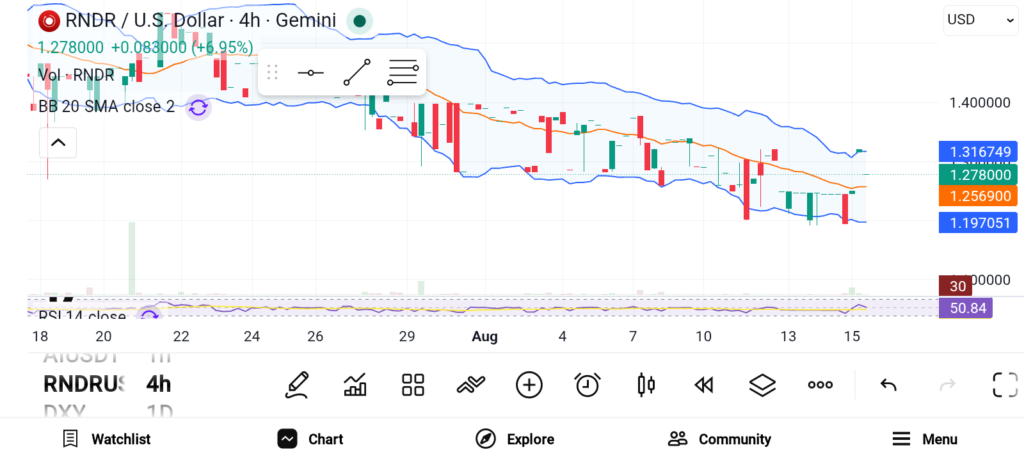
Render provides decentralized GPU computing for rendering and AI workloads. The network connects users needing GPU resources with available hardware operators. GPU providers earn tokens for contributing computing capacity to the network. Render began on Ethereum before moving the token to Solana. The token now trades under the RENDER ticker. The network also moved beyond traditional 3D rendering workloads. Current applications include AI inference and creative software workflows. Render’s Dispersed compute subnet adds enterprise-grade hardware to the network. Supported hardware includes powerful Nvidia H100 and H200 GPUs. Rising AI demand could therefore strengthen the need for decentralized compute. Render offers exposure to this infrastructure trend through a practical marketplace.
Fetch.ai (FET)
 Source: Trading View
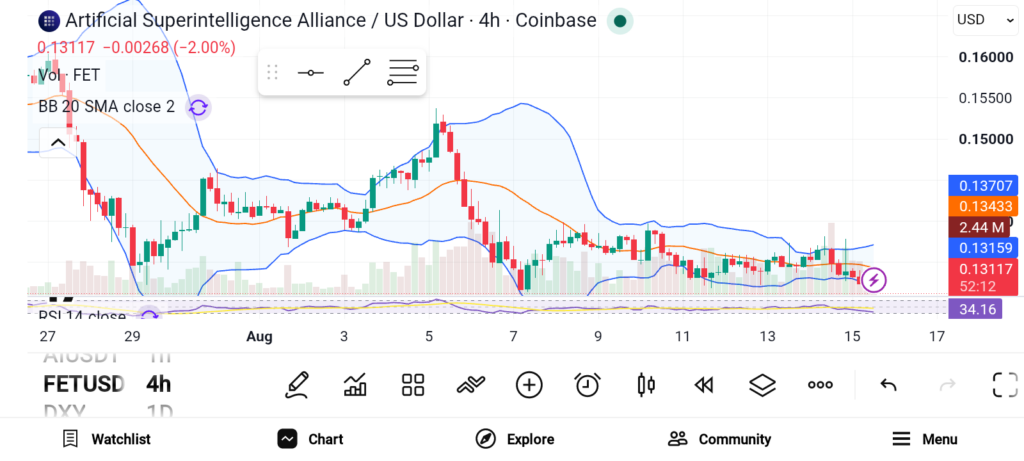
Fetch.ai takes a different approach by combining blockchain technology with autonomous AI agents. These software agents can negotiate, transact, and perform tasks for users. The FET token supports agent registration, services, and network governance. Fetch.ai also anchors the Artificial Superintelligence Alliance. The alliance includes SingularityNET and focuses on decentralized artificial intelligence development. The group has proposed changing FET to the ASI token. However, the transition remains pending as of mid-2026. Major exchanges still commonly list the asset under FET. Investors should check current exchange listings before trading. Fetch.ai also has recent developments beyond long-term promises. The ASI:Create platform provides a practical environment for agent development. A 2026 code-safety partnership adds another tangible development milestone.
Internet Computer (ICP)
 Source: Trading View
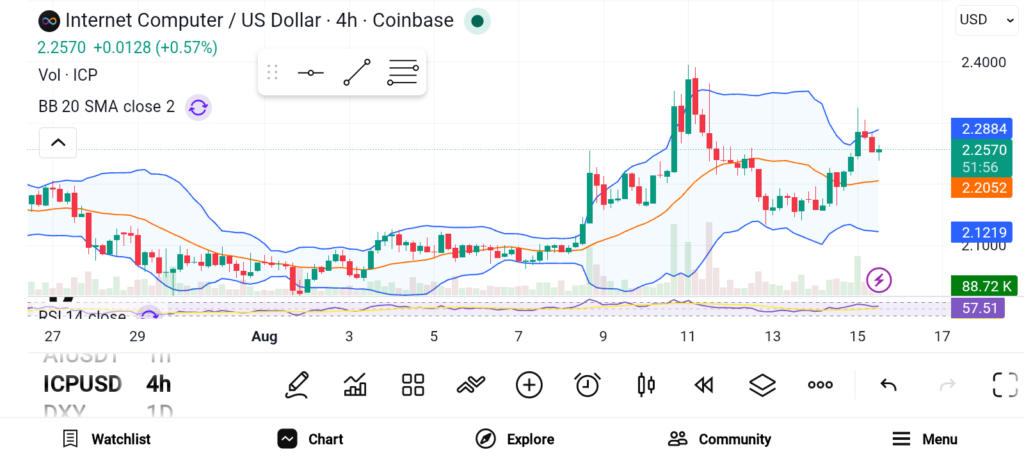
Internet Computer aims to provide decentralized infrastructure for complete web applications. Developers can build smart contracts and full-stack services directly on the network. ICP also supports AI models and inference through on-chain computing. Chain Fusion connects the network with major ecosystems, including Bitcoin and Solana. This approach could help developers build applications across several blockchain environments. Internet Computer also launched Caffeine AI for natural-language application development. The platform allows users to create full-stack applications through simple prompts. Meanwhile, the Mission 70 upgrade targets major reductions in ICP inflation. The plan aims to cut inflation by at least 70% by 2026’s end. Lower inflation could improve the token’s long-term supply dynamics.
Render targets rising demand for decentralized GPU computing and AI inference. Fetch.ai focuses on autonomous agents and decentralized artificial intelligence services. Internet Computer combines on-chain computing with AI and multi-chain infrastructure. These three projects offer different ways to gain exposure to AI-focused crypto growth.