The Strait of Hormuz has turned into one of the biggest macro factors for Bitcoin this summer, but a reopening would not automatically mean BTC rallies.
For Bitcoin investors, if reopening pushes oil down long enough to cool inflation expectations, ease yields, and take pressure off the Fed, it could set up a better environment for risk assets. Nevertheless, in case the de-escalation is short-lived, Bitcoin might not see much lasting benefit.
Since the strait normally handles about 20% of the world’s oil and LNG shipments, a prolonged shutdown can quickly become an inflation problem, not just a political one.
In the case of reopening, the geopolitical risk based around oil would likely drop, which is notable because we’ve already seen how quickly oil reacts to diplomatic headlines.
For instance, on August 3, optimism about possible negotiations sent oil prices down roughly 5%, and Treasury yields fell too as worries about inflation started to ease.
Back in April, when Iran announced a reopening of the Strait, there was an instant market reaction where oil tumbled, stocks and crypto climbed, and the dollar slipped.
However, it’s worth noting that Bitcoin wouldn’t necessarily explode higher, as capital may rotate into equities and other risk assets without specifically targeting BTC. Previous developments also show why investors shouldn’t view a reopening as an automatic trigger to buy Bitcoin.
In late July, when US-Iran strikes paused, Brent crude plunged 7%, while stocks and DeFi tokens climbed. Bitcoin stayed at about $65,000 and didn’t shoot up right away, but the broader shift toward risk-on sentiment was clear.
This takeaway is important to remember because lower oil by itself isn’t enough for Bitcoin.
The biggest upside for Bitcoin would come if the reopening leads to better global liquidity and more dovish rate expectations. In other words, if cheaper energy actually leads to a lasting drop in inflation, enough to push yields down and make markets expect a less aggressive Fed. That would boost liquidity and risk appetite, which could give BTC a stronger tailwind.
The opposite scenario is considerably more dangerous for Bitcoin.
Higher oil prices can eventually turn into a problem for monetary policy. Costlier energy makes it more expensive to ship goods and produce things, which can keep inflation elevated. That could force markets to price in a more hawkish Federal Reserve.
Even the current data shows how significant the oil shock has become.
According to reports, on August 14 that Brent crude had gained roughly 6% over the week.
At the same time, the US 10-year Treasury yield finished that day at around 4.66%, about 10 basis points higher than the previous month.
By August 17, Brent was at about $88.58 a barrel. Over the prior weekend, only five ships reportedly made it through the Strait on Saturday, and none on Sunday, compared to 31 the weekend before.
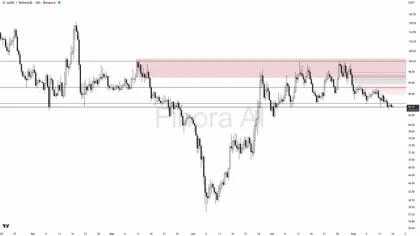
This uncertainty, especially through August, took a toll on Bitcoin as well. According to CoinMarketCap, through the entirety of the month, BTC traded between $62,500 and $65,000, often recording small drops and never gaining meaningful momentum.
Crude oil serves as the most direct indicator of the risk associated with the Strait of Hormuz.
This is fairly evident since the strait is fundamentally tied to energy supply. So, Brent crude prices are essentially acting as a real-time gauge of how likely and how serious a disruption is.
In fact, Brent crude already marked a weekly increase of approximately 5%, even as US inflation data came in relatively mild.
As for gold, it has held up pretty well, even with oil pushing higher and changing Fed expectations. By August 17, it was trading around $4,414 an ounce and had a second straight weekly gain.
Such a development is notable because gold is acting more like the traditional safe-haven asset it’s supposed to be.
On the other hand, Bitcoin is different. It has traded like a risk-sensitive asset during parts of the crisis. On August 11, for instance, it dipped below $64,500 as new Hormuz uncertainty sent oil climbing and put pressure on risk assets.
This serves as a good example, considering that even with geopolitical tensions and oil staying high, gold has stayed relatively steady, and Bitcoin has been hanging around $63,000 on average. US stocks, meanwhile, are still near their all-time highs, despite the ongoing standoff.
Such a situation indicates Bitcoin isn’t pricing in geopolitical risk the same way gold does. Instead, BTC seems to be responding to a mix of geopolitical tensions and general financial conditions.
(adsbygoogle = window.adsbygoogle || []).push({});A reopening of the Strait of Hormuz would be most favorable for Bitcoin if multiple indicators align in the same direction.
Brent crude: if prices head down and stay down, that would signal the energy risk premium is fading away.
10-year Treasury yield: if yields drop, it would be a stronger signal that lower oil is helping to cool inflation and take pressure off the Fed. The 10-year yield was about 4.73% on August 17.
Fed expectations: should investors start expecting fewer interest rate hikes or a higher chance that rates will be cut in the future, that would boost the bullish case for BTC.
The dollar: a weaker dollar usually helps risk assets like Bitcoin. On August 17, it fell to its lowest level since June, as traders scaled back their expectations on near-term Fed rate hikes.
Bitcoin relative strength: most importantly, investors should see whether BTC does better than stocks and other risk assets after oil falls. If oil collapses and Bitcoin barely budges, it would be a sign that crypto-specific factors are drowning out the macro tailwind.
As such, Hormuz reopening may benefit Bitcoin, but under the right conditions. So, for investors, the best signal is what oil, yields, the dollar, and Bitcoin do in the days and weeks after.
If all four move in a direction that benefits Bitcoin, a Hormuz reopening could end up being a real positive trigger.